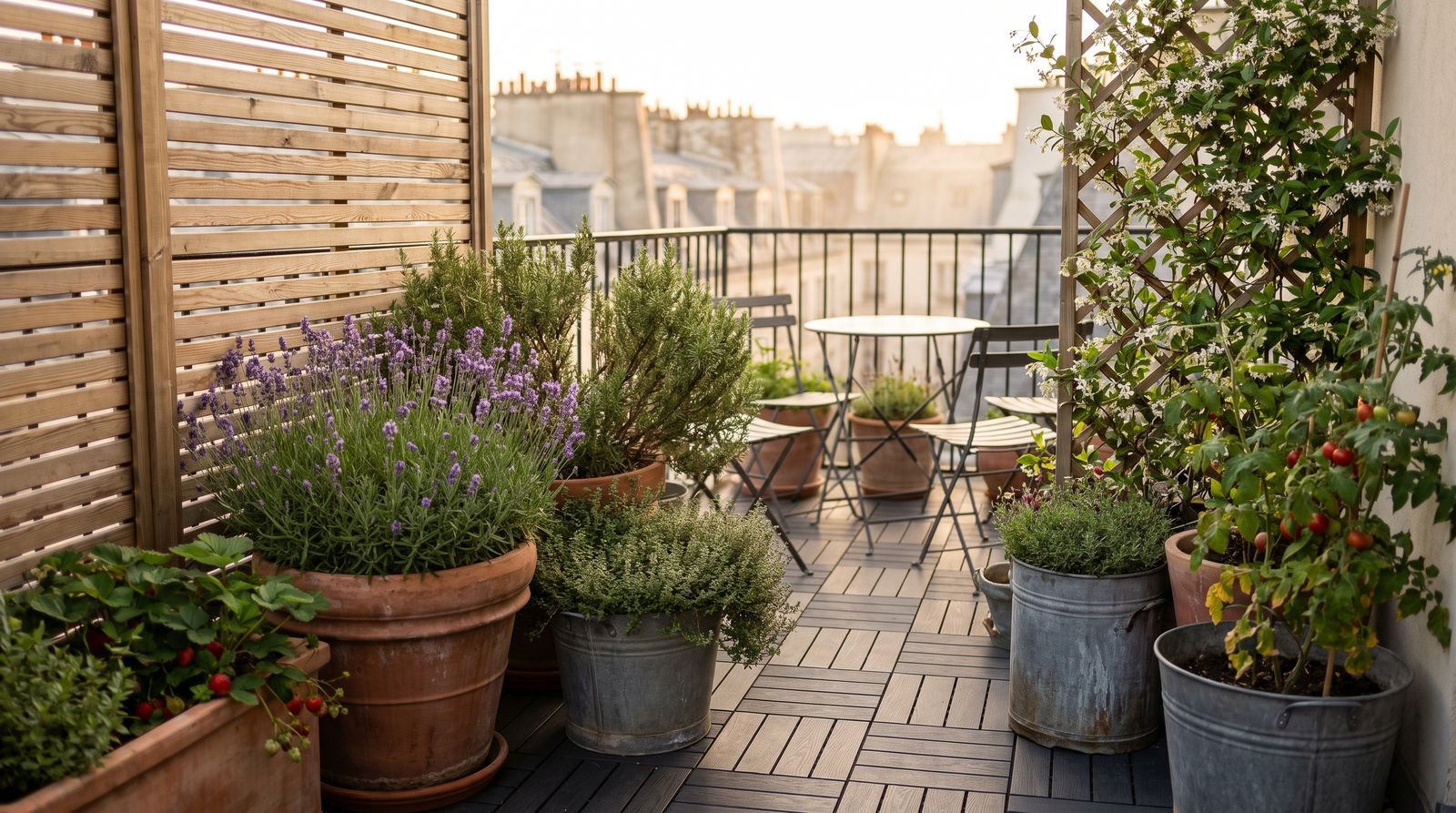
Balcony garden ideas
On a balcony the pot is the garden. Get the container size and the wind right and nearly everything else follows.
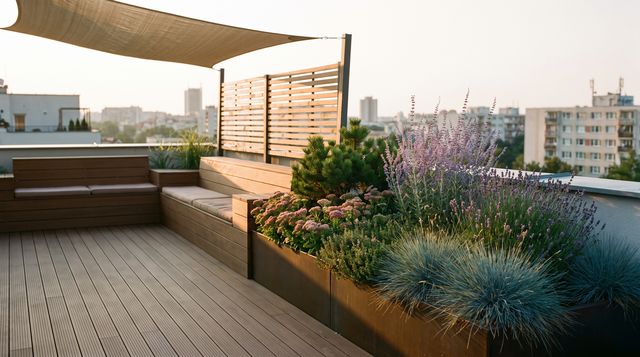
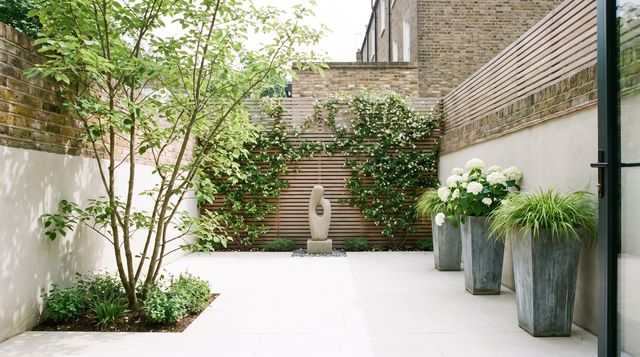
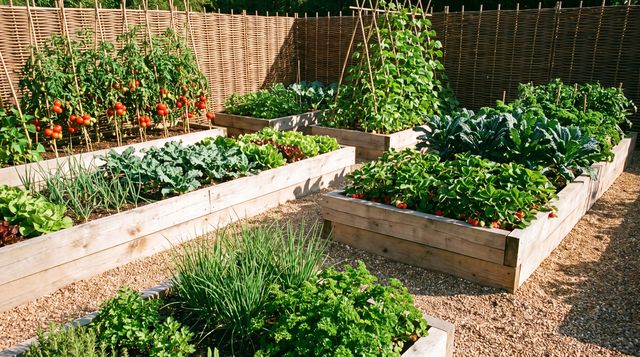
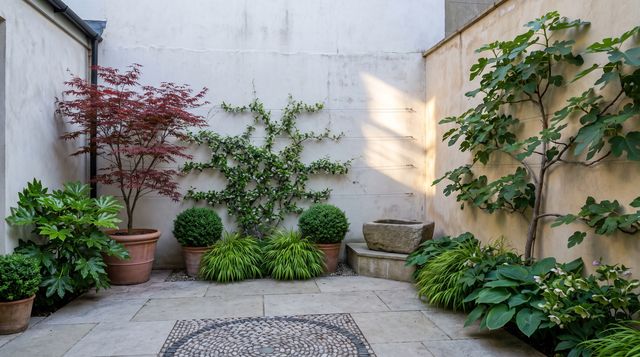
AI-generated concept image
- Light
- Partial shade
- Water
- Moderate
- Upkeep
- Medium
- Color
- Warm
- Planting survives
- 10 °F / −12 °C
Getting it right
Buy bigger pots than you think you need. Anything under about 12 inches (30 cm) across dries out by lunchtime in July, and roots cook against the sides. Check the balcony's weight limit before you commit, and use a potting mix lightened with perlite rather than garden soil. Screen the prevailing wind with a slatted panel rather than a solid one, group pots so they shade each other's sides, and fit a watering timer if you're ever away in August.
How to plan it
Note which way it faces first. A south- or west-facing balcony gets intense afternoon sun and suits lavender, rosemary, herbs and tomatoes; an east-facing one gets gentle morning sun; a north-facing or covered balcony suits coral bells, Japanese sedge and ferns. Above the fourth or fifth floor, assume wind from every side.
Keep the floor clear for a small table and two chairs, and put the planting on the railing and walls: rail planters secured on the inside of the railing, a wall-mounted trellis for a climber, and one or two large pots in the corners, where the structure is strongest.
Watering is the daily job. Self-watering containers or a simple drip kit on a battery timer save most balcony gardens in summer. Check your lease or HOA before fixing anything to walls or railings, and make sure drainage water doesn't drip onto the balcony below.
Plants that work
| Plant | Type | Light | Water | Height | Hardy to |
|---|---|---|---|---|---|
| English lavenderLavandula angustifolia | Shrub · Evergreen | Full sun | Low | 16–28 in (40–70 cm) | −4 °F / −20 °C |
| RosemarySalvia rosmarinus | Shrub · Evergreen | Full sun | Low | 2–5 ft (0.6–1.5 m) | 10 °F / −12 °C |
| ThymeThymus vulgaris | Herb · Evergreen | Full sun | Low | 8–12 in (20–30 cm) | −4 °F / −20 °C |
| BasilOcimum basilicum | Herb · Deciduous | Full sun | High | 12–24 in (30–60 cm) | Grown as an annual |
| StrawberryFragaria × ananassa | Edible · Deciduous | Full sun | Moderate | 8–12 in (20–30 cm) | −13 °F / −25 °C |
| Zonal geraniumPelargonium × hortorum | Perennial · Deciduous | Full sun | Moderate | 12–20 in (30–50 cm) | Grown as an annual |
| Star jasmineTrachelospermum jasminoides | Climber · Evergreen | Partial shade | Moderate | 10–20 ft (3–6 m) | 10 °F / −12 °C |
| Blue fescueFestuca glauca | Grass · Evergreen | Full sun | Low | 8–12 in (20–30 cm) | −22 °F / −30 °C |
| Japanese sedgeCarex oshimensis | Grass · Evergreen | Partial shade | Moderate | 12–18 in (30–45 cm) | −4 °F / −20 °C |
| Coral bellsHeuchera (hybrids) | Perennial · Semi-evergreen | Partial shade | Moderate | 12–20 in (30–50 cm) | −22 °F / −30 °C |
| English ivyHedera helixInvasive in parts of the US. Check your state's list. | Climber · Evergreen | Shade | Low | 7–33 ft (2–10 m) | −13 °F / −25 °C |
| TomatoSolanum lycopersicum | Edible · Deciduous | Full sun | High | 3–7 ft (1–2 m) | Grown as an annual |
Surfaces and materials
- Composite deck
- Terracotta pots
- Zinc planters
- Trellis
- Slatted wood screen
- String lights
- Shade sail
Works well when
- You rent and cannot build
- The yard is small
- There is a structural weight limit
- You want to grow food
- Neighbors can see in
Think twice when
- The site is open and windy
- There is no outdoor spigot
- You want low maintenance
Common questions
What grows well on a windy balcony?
Small-leaved, low and flexible plants: lavender, rosemary, thyme, blue fescue and Japanese sedge. Avoid big soft leaves and tall plants in light pots, which get shredded or blown over.
How much weight can my balcony hold?
It varies widely from building to building, so ask the building manager or check the building documents rather than guessing. Wet potting mix is heavy, and a few large pots can weigh more than people expect; lightweight mix and plastic or fiberglass containers help.
Can I grow vegetables on a balcony?
Yes, if it gets at least six hours of sun. Cherry tomatoes, basil, strawberries, lettuce and herbs all do well in containers, with at least 5 gallons (19 liters) of mix for each tomato and 1 to 2 gallons (4–8 liters) for herbs.
Is English ivy good on a balcony?
It's tough and evergreen, but English ivy is invasive in much of the US and works its way into walls and gutters. Star jasmine in mild climates, or clematis on a trellis, makes a better balcony climber.
See a balcony garden on your own photo
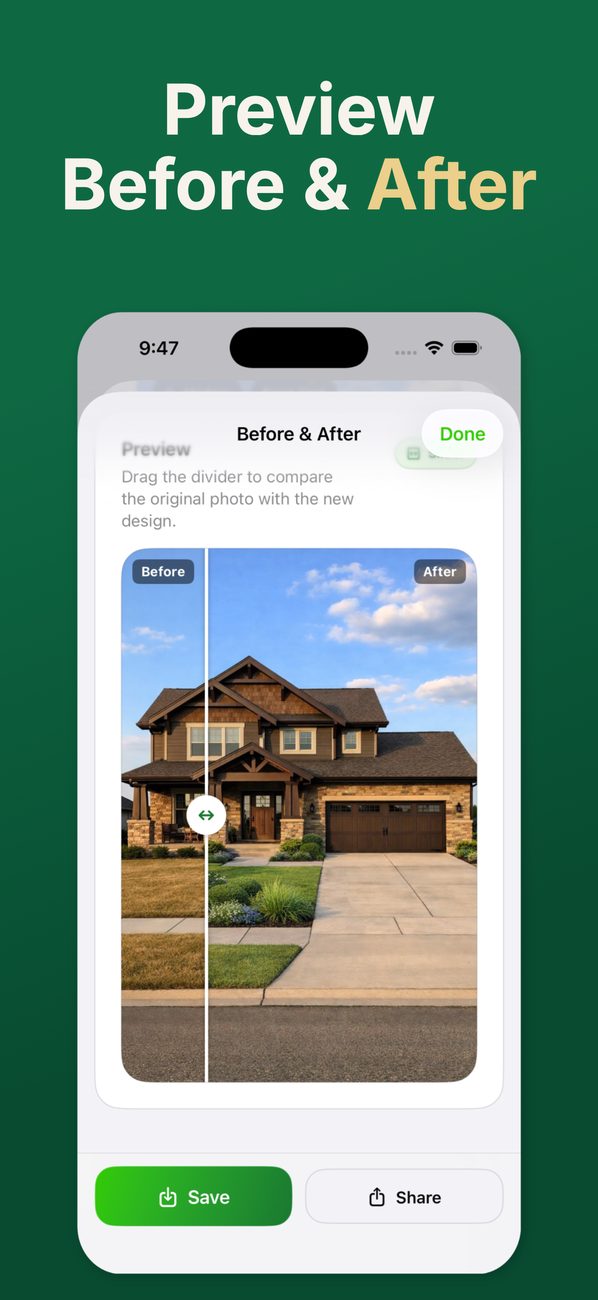
Take a photo of the space as it is today and compare the redesign side by side with the original.

Scan to install