Kitchen garden ideas
Productive and good-looking aren't in conflict. A kitchen garden just needs its geometry settled before any seed goes in.
AI-generated concept image
- Light
- Full sun
- Water
- High
- Upkeep
- High
- Color
- Vibrant
- Planting survives
- 23 °F / −5 °C
Getting it right
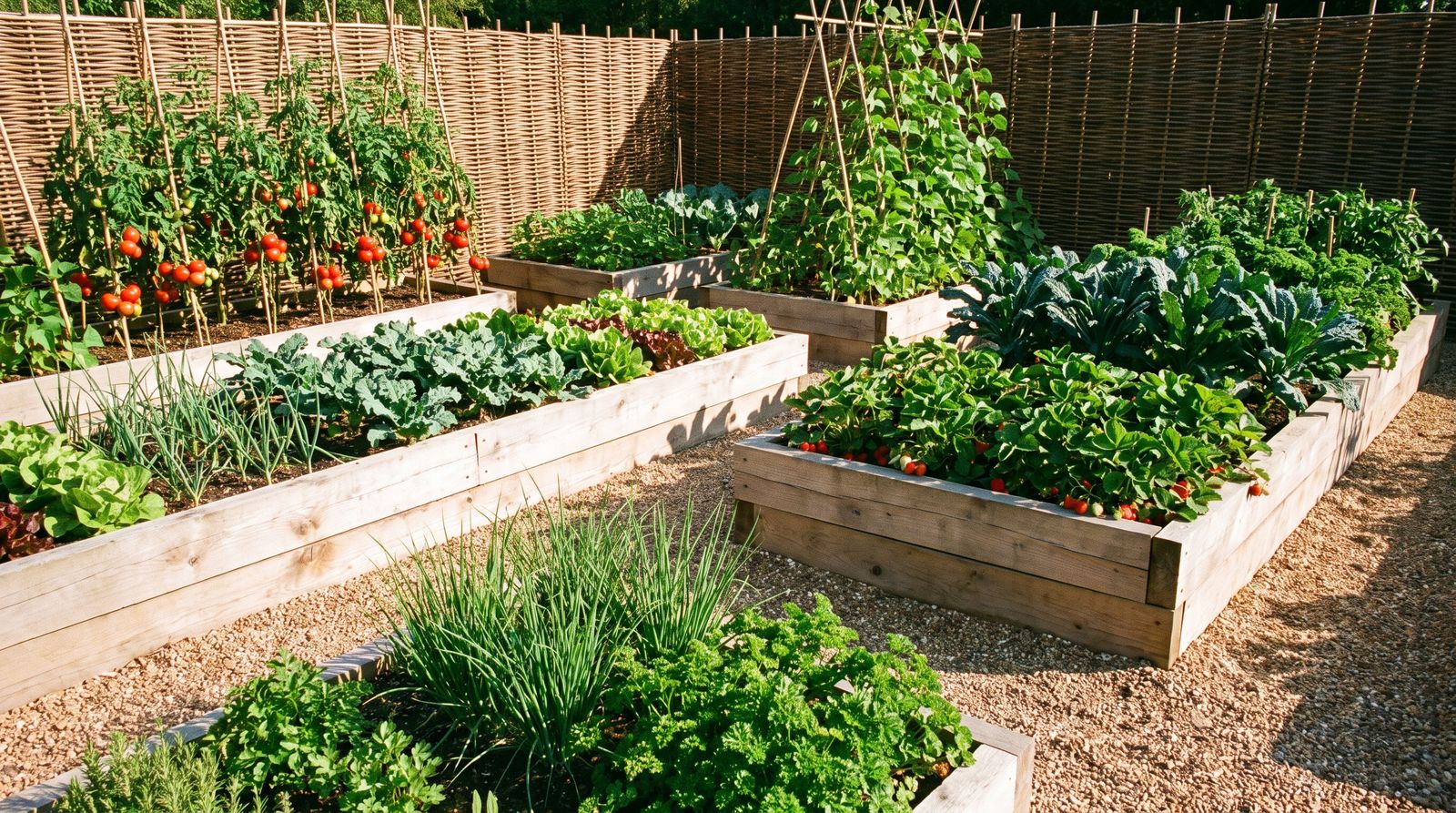
Size the beds around your arms rather than the space: 4 feet (1.2 m) wide means you can reach the middle from either side and never stand on the soil. Leave 18 inches (45 cm) between beds and one main path 3 feet (90 cm) wide so a wheelbarrow fits. Put the herbs you cut most, chives, parsley and thyme, nearest the kitchen door, because the ones at the far end of the yard quietly stop being used. Keep one bed empty for whatever the season turns out to want.
How to plan it
Put it in the sunniest spot you have, ideally six to eight hours of direct sun, and as close to the house as you can manage. A kitchen garden you pass every day gets picked, watered and weeded; one at the back of the yard gets forgotten in July.
Raised beds 10 to 12 inches (25–30 cm) deep are enough for most vegetables and warm up faster in spring. Fill them with a blend of topsoil and compost, run the long sides north to south so both sides get sun, and put tall crops like pole beans and tomatoes at the north end, where they won't shade the rest.
Rotate crops through a simple four-bed cycle: tomatoes and squash, then beans and peas, then leafy greens and brassicas like kale, then roots. Perennial crops, such as strawberries, rhubarb, raspberries and currants, get their own permanent bed at one end, since they stay put for years.
Plants that work
| Plant | Type | Light | Water | Height | Hardy to |
|---|---|---|---|---|---|
| TomatoSolanum lycopersicum | Edible · Deciduous | Full sun | High | 3–7 ft (1–2 m) | Grown as an annual |
| LettuceLactuca sativa | Edible · Deciduous | Partial shade | High | 8–12 in (20–30 cm) | 23 °F / −5 °C |
| KaleBrassica oleracea (Acephala) | Edible · Semi-evergreen | Full sun | Moderate | 16–31 in (40–80 cm) | 10 °F / −12 °C |
| ZucchiniCucurbita pepo | Edible · Deciduous | Full sun | High | 2–3 ft (50–90 cm) | Grown as an annual |
| Scarlet runner beanPhaseolus coccineus | Edible · Deciduous | Full sun | High | 7–10 ft (2–3 m) | Grown as an annual |
| StrawberryFragaria × ananassa | Edible · Deciduous | Full sun | Moderate | 8–12 in (20–30 cm) | −13 °F / −25 °C |
| RaspberryRubus idaeus | Edible · Deciduous | Partial shade | Moderate | 5–7 ft (1.5–2 m) | −22 °F / −30 °C |
| Red currantRibes rubrum | Edible · Deciduous | Partial shade | Moderate | 4–6 ft (1.2–1.8 m) | −22 °F / −30 °C |
| AppleMalus domestica | Edible · Deciduous | Full sun | Moderate | 7–16 ft (2–5 m) | −22 °F / −30 °C |
| RhubarbRheum rhabarbarum | Edible · Deciduous | Partial shade | High | 3–4 ft (0.8–1.2 m) | −22 °F / −30 °C |
| ChivesAllium schoenoprasum | Herb · Deciduous | Full sun | Moderate | 10–16 in (25–40 cm) | −22 °F / −30 °C |
| BasilOcimum basilicum | Herb · Deciduous | Full sun | High | 12–24 in (30–60 cm) | Grown as an annual |
| ParsleyPetroselinum crispum | Herb · Deciduous | Partial shade | Moderate | 10–16 in (25–40 cm) | 14 °F / −10 °C |
| ThymeThymus vulgaris | Herb · Evergreen | Full sun | Low | 8–12 in (20–30 cm) | −4 °F / −20 °C |
| SageSalvia officinalis | Herb · Semi-evergreen | Full sun | Low | 16–28 in (40–70 cm) | −4 °F / −20 °C |
| SpearmintMentha spicata | Herb · Deciduous | Partial shade | High | 16–31 in (40–80 cm) | −13 °F / −25 °C |
Surfaces and materials
- Wood raised beds
- Metal raised beds
- Decomposed granite
- Compost mulch
- Trellis
- Woven wattle fence
- Reclaimed brick
Works well when
- You want to grow food
- It gets sun for most of the day
- You enjoy hands-on gardening
- The space is sheltered and warm
- Young children play there
Think twice when
- You want low maintenance
- It is shaded for most of the day
- Deer or rabbits visit
Common questions
How big should a vegetable bed be?
4 feet (1.2 m) wide so you can reach the middle from either side, and as long as suits the space, often 8 feet (2.4 m). Wider beds mean stepping on the soil, which compacts it.
What should I grow first?
Start with what you eat most and what tastes best fresh: lettuce, herbs, tomatoes, zucchini and pole beans are productive and forgiving. Add perennial fruit like strawberries and raspberries once the beds are in.
How do I keep deer and rabbits out?
A fence is the only reliable answer. Rabbits need about 2 feet (60 cm) of fine mesh with the bottom buried a few inches; deer need 7 to 8 feet (2.1–2.4 m), or a double fence. Netting over individual beds works for small gardens.
Can I grow mint in a raised bed?
Only in its own pot. Mint spreads by runners and will take over a bed within a season, so sink it in a container or keep it in a separate planter.
See a kitchen garden on your own photo
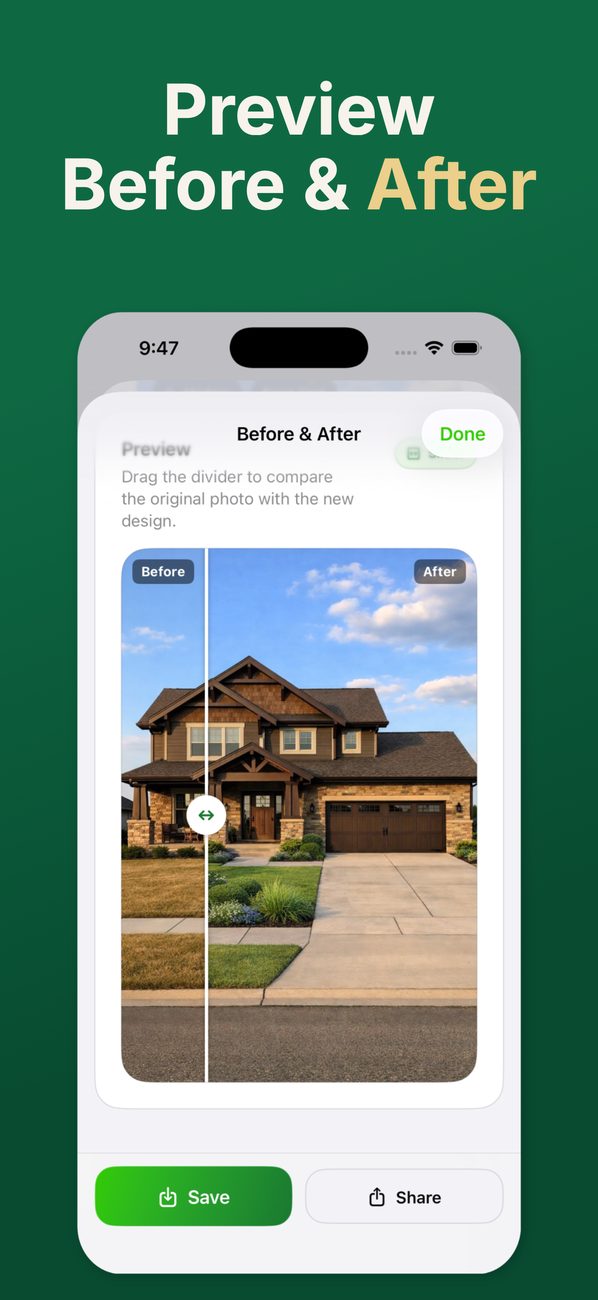
Take a photo of the space as it is today and compare the redesign side by side with the original.

Scan to install