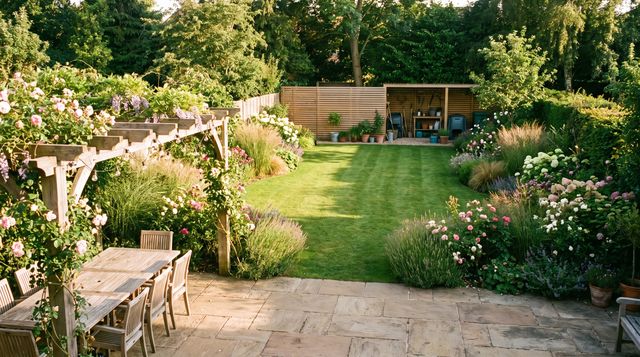
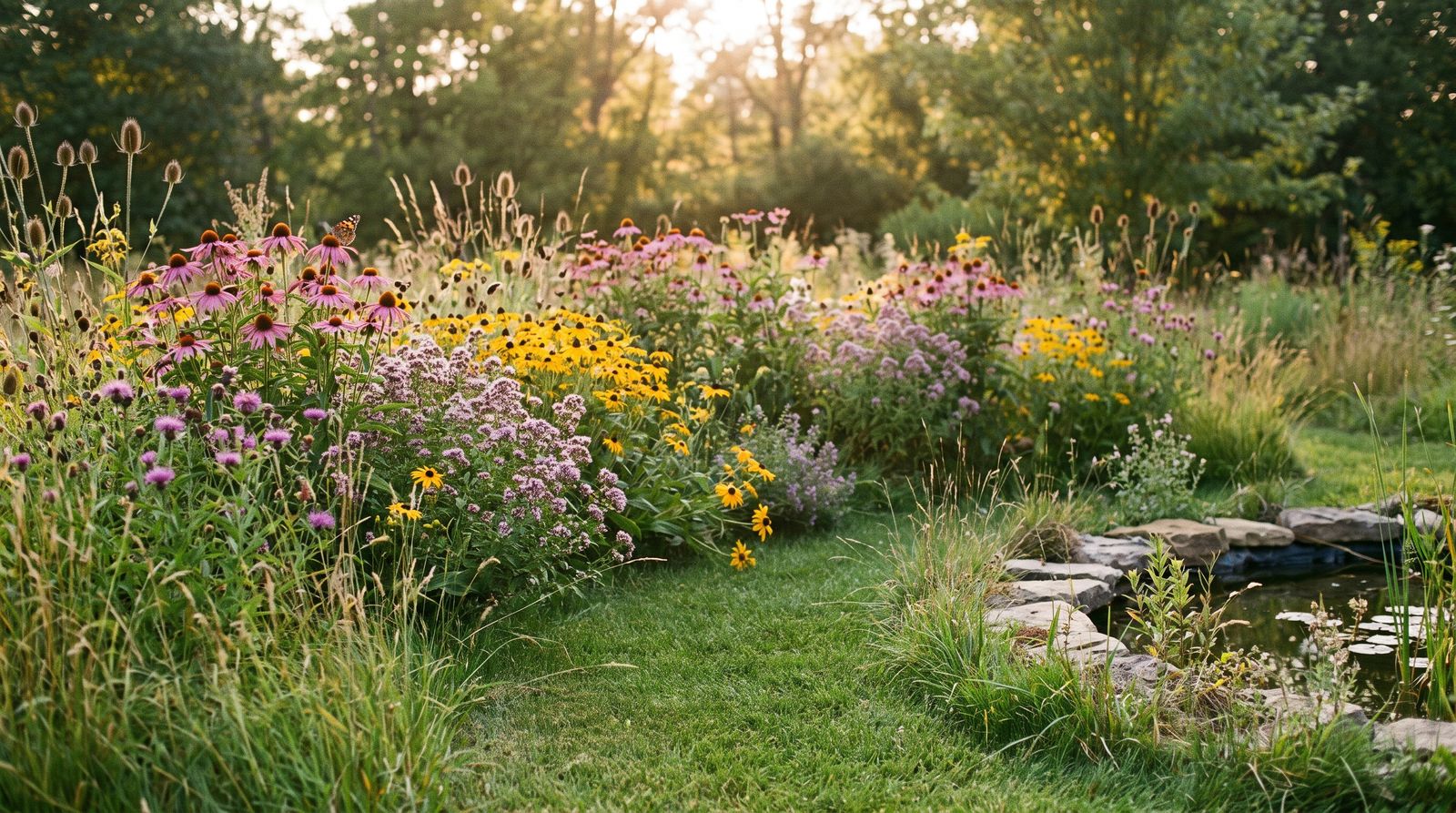
Wildlife garden ideas
A garden that feeds insects from March to October and still looks deliberate to everyone walking past.
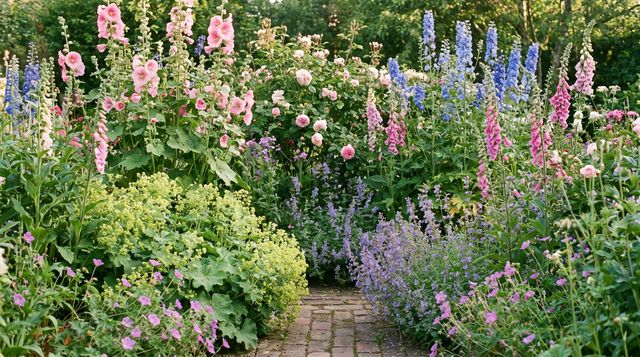
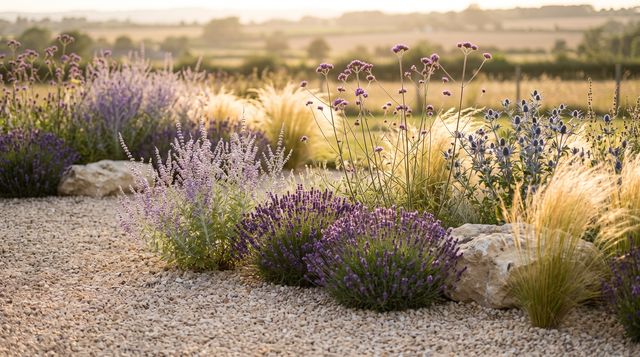
AI-generated concept image
- Light
- Full sun
- Water
- Low
- Upkeep
- Low
- Color
- Seasonal mix
- Planting survives
- −4 °F / −20 °C
Getting it right
Aim for something in flower every week from early spring to late fall rather than one spectacular June; that continuity matters far more to insects than any single plant choice. Leave seedheads standing over winter and mow a meadow area only after midsummer. Add water at any scale, even a sunken bowl with a stone ramp out of it. Then keep one thing sharp: a mown path, a clipped edge, a defined boundary, so the wildness reads as a decision.
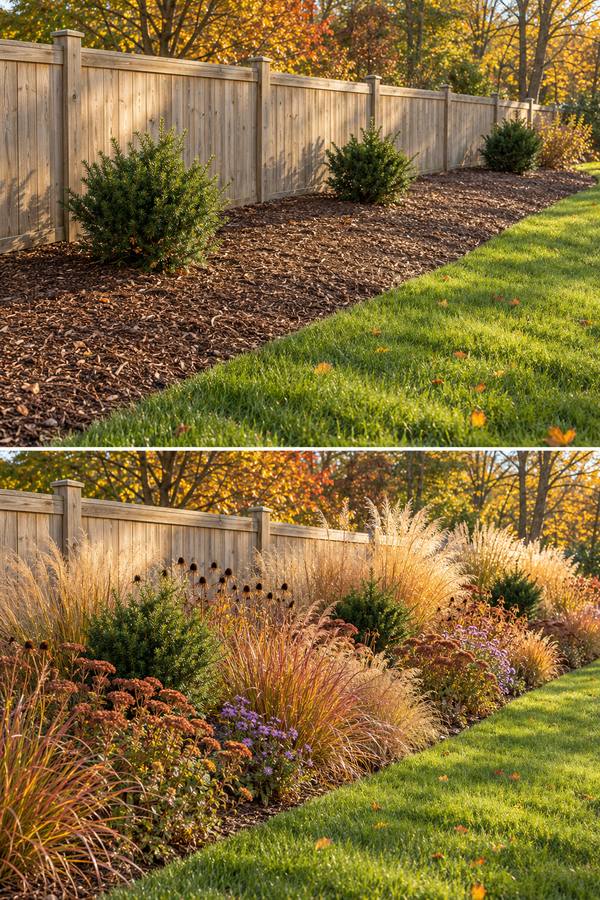
Before and after
Top: before. Bottom: after. AI-generated illustrations of the idea; a design made from your own photo will look different.
How to plan it
Plant for continuity, and put natives first. Purple coneflower, black-eyed Susan and yarrow support far more local insects than most imports, which is why they lead the list on this page. Fill gaps with long-flowering plants like meadow sage and oregano, and plant each in groups of at least three so pollinators can find them.
Give wildlife structure as well as flowers: a shrub layer for nesting birds, a patch of bare, sunny soil for ground-nesting bees, a log pile in a shady corner, and water. A small pond with one gently sloped side lets birds bathe and animals climb out; even a shallow dish refilled every day helps in summer.
Stay tidy where people look. Mow a crisp path through any meadow area, keep a clean edge along the sidewalk, and save the wildest planting for the back of the yard. Many towns have weed or grass-height ordinances, so check before letting a front lawn grow long; a small pollinator-habitat sign helps neighbors read it as intentional.
Plants that work
| Plant | Type | Light | Water | Height | Hardy to |
|---|---|---|---|---|---|
| Purple coneflowerEchinacea purpurea | Perennial · Deciduous | Full sun | Moderate | 3–4 ft (0.8–1.2 m) | −22 °F / −30 °C |
| Black-eyed SusanRudbeckia fulgida | Perennial · Deciduous | Full sun | Moderate | 20–31 in (50–80 cm) | −22 °F / −30 °C |
| Meadow sageSalvia nemorosa | Perennial · Deciduous | Full sun | Low | 16–28 in (40–70 cm) | −22 °F / −30 °C |
| Field scabiousKnautia arvensisInvasive in parts of the US. Check your state's list. | Perennial · Deciduous | Full sun | Low | 2–3 ft (0.6–1 m) | −22 °F / −30 °C |
| Oxeye daisyLeucanthemum vulgareInvasive in parts of the US. Check your state's list. | Perennial · Deciduous | Full sun | Low | 16–31 in (40–80 cm) | −22 °F / −30 °C |
| Musk mallowMalva moschata | Perennial · Deciduous | Full sun | Low | 24–31 in (60–80 cm) | −22 °F / −30 °C |
| Black mulleinVerbascum nigrum | Perennial · Deciduous | Full sun | Low | 3–4 ft (0.8–1.2 m) | −13 °F / −25 °C |
| OreganoOriganum vulgare | Herb · Semi-evergreen | Full sun | Low | 12–24 in (30–60 cm) | −13 °F / −25 °C |
| YarrowAchillea millefolium | Perennial · Deciduous | Full sun | Low | 20–31 in (50–80 cm) | −31 °F / −35 °C |
| Butterfly bushBuddleja davidiiInvasive in parts of the US. Check your state's list. | Shrub · Deciduous | Full sun | Low | 5–10 ft (1.5–3 m) | −4 °F / −20 °C |
| Common hawthornCrataegus monogynaInvasive in parts of the US. Check your state's list. | Tree · Deciduous | Full sun | Low | 10–26 ft (3–8 m) | −22 °F / −30 °C |
| European hazelnutCorylus avellana | Shrub · Deciduous | Partial shade | Moderate | 10–16 ft (3–5 m) | −22 °F / −30 °C |
| Bloodtwig dogwoodCornus sanguinea | Shrub · Deciduous | Partial shade | Moderate | 5–10 ft (1.5–3 m) | −22 °F / −30 °C |
| HeatherCalluna vulgaris | Shrub · Evergreen | Full sun | Low | 8–20 in (20–50 cm) | −22 °F / −30 °C |
Surfaces and materials
- Meadow seed mix
- Wildlife pond
- Boulders
- Bark mulch
- Woven wattle fence
- Decomposed granite
Works well when
- Pollinators matter to you
- The soil is thin and poor
- You want low maintenance
- The budget is tight
- It gets sun for most of the day
Think twice when
- It has to look good in winter
- Curb appeal and resale matter
- The yard is small
Common questions
What's the difference between a wildlife garden and a pollinator garden?
A pollinator garden focuses on flowers for bees, butterflies and other insects. A wildlife garden goes further, adding food, water, cover and nesting places for birds, frogs and small mammals too.
Do I have to use only native plants?
No, but natives should lead, because they feed the caterpillars and specialist bees that birds and other wildlife depend on. Skip anything invasive where you live: butterfly bush, oxeye daisy, field scabious and common hawthorn are all invasive in parts of the US.
When should I cut back a wildlife garden?
Wait until early spring. Seedheads feed birds through winter, and hollow stems shelter overwintering insects. Cut perennials back in March or April, leaving stems 8 to 12 inches (20–30 cm) tall for stem-nesting bees.
Can a wildlife garden be small?
Yes. A few square feet of nectar plants, a shallow water dish and one shrub make a difference, especially if neighbors do the same. Containers of herbs like oregano and thyme on a balcony feed bees too.
See a wildlife garden on your own photo
Take a photo of the space as it is today and compare the redesign side by side with the original.

Scan to install