Gravel garden ideas
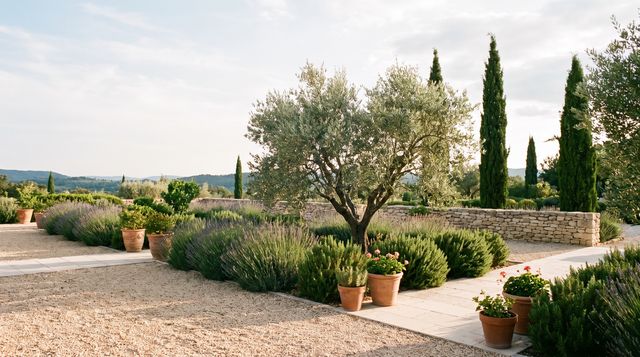
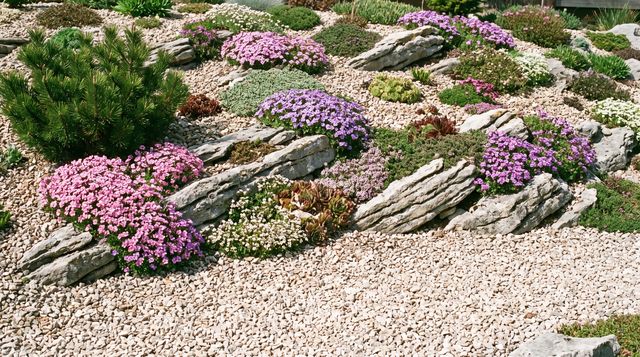
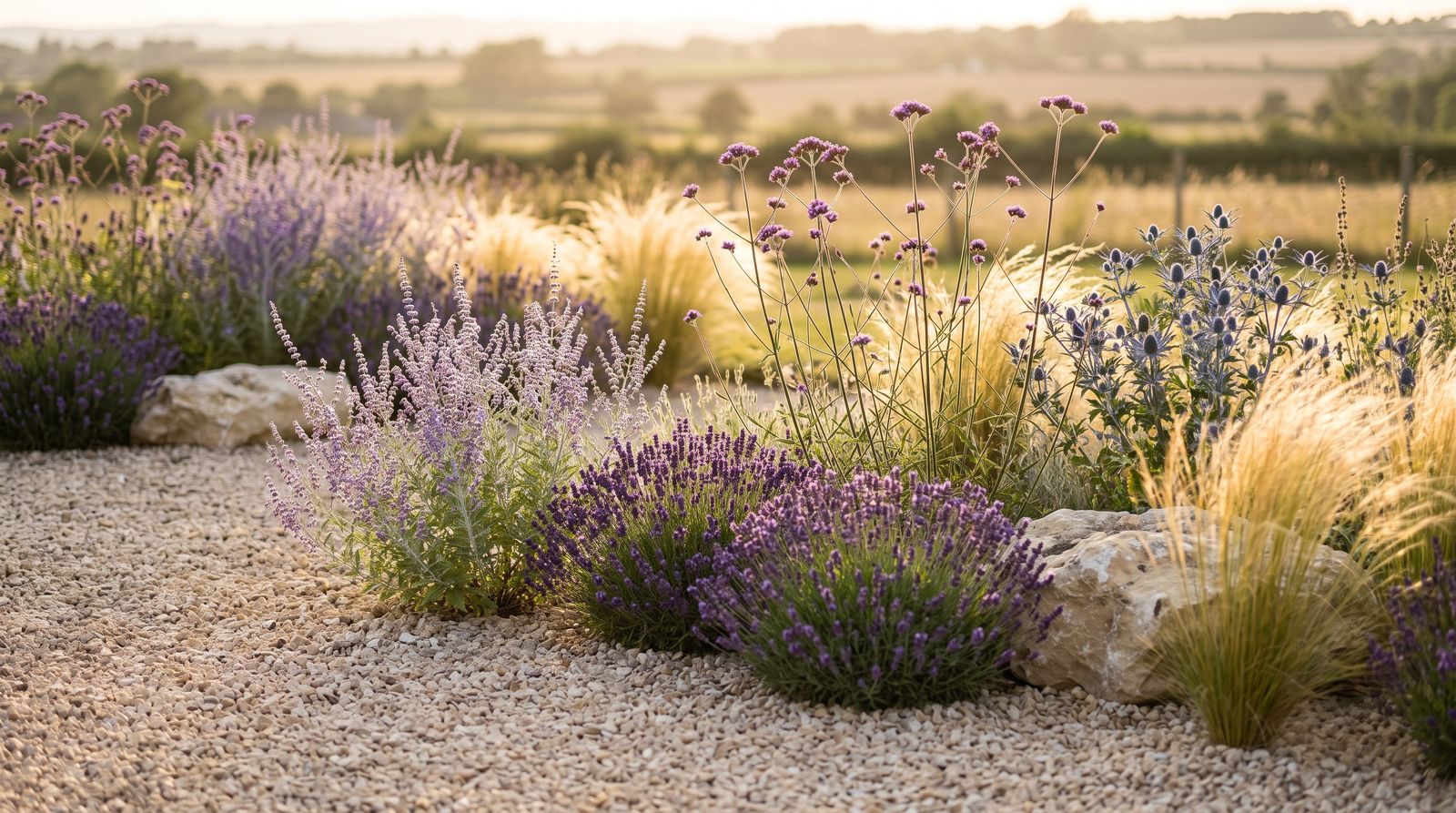
Planted into gravel and barely watered after the first summer. It's the lowest-input yard that still looks like someone designed it.
AI-generated concept image
- Light
- Full sun
- Water
- Low
- Upkeep
- Low
- Color
- Neutral
- Planting survives
- 10 °F / −12 °C
Getting it right
Counterintuitively, don't improve the soil. Compost holds moisture and pushes soft growth that flops and rots, and the plants that make this style work want it lean. Spread 3–4 inches (75–100 mm) of 3/8 to 3/4 inch (10–20 mm) gravel straight over loosened ground with no landscape fabric underneath, plant through it, and water only through the first growing season. After that the gravel keeps the roots cool, and seedlings start filling the gaps on their own.
How to plan it
A gravel garden is the planted cousin of xeriscaping, and it suits most of the western US and anywhere else with dry summers or watering limits. It also works in wetter regions on sandy, free-draining soil, but not on heavy clay that stays wet through winter.
Kill the existing lawn or weeds completely first, either by smothering them under cardboard for a season or by digging them out, then loosen the soil without adding compost. Set out the largest plants first, such as Russian sage and Adam's needle, then fill between them with groups of three to seven smaller plants in loose drifts. Plant through the gravel and pull it back around each stem.
Leave room for paths of the same gravel so the planting and the walking surface blend together, and edge the whole area with steel or stone so the gravel doesn't wander into the lawn. Expect self-seeding: Brazilian verbena, alliums and sea holly will pop up between other plants, and you edit them rather than plant them.
Plants that work
| Plant | Type | Light | Water | Height | Hardy to |
|---|---|---|---|---|---|
| Russian sageSalvia yangii | Shrub · Deciduous | Full sun | Low | 3–4 ft (0.8–1.2 m) | −13 °F / −25 °C |
| English lavenderLavandula angustifolia | Shrub · Evergreen | Full sun | Low | 16–28 in (40–70 cm) | −4 °F / −20 °C |
| Mexican feather grassNassella tenuissimaInvasive in parts of the US. Check your state's list. | Grass · Semi-evergreen | Full sun | Low | 16–24 in (40–60 cm) | −4 °F / −20 °C |
| Mediterranean spurgeEuphorbia characias | Perennial · Evergreen | Full sun | Low | 3–4 ft (0.8–1.2 m) | 10 °F / −12 °C |
| Brazilian verbenaVerbena bonariensis | Perennial · Deciduous | Full sun | Low | 4–6 ft (1.2–1.8 m) | 10 °F / −12 °C |
| Flat sea hollyEryngium planum | Perennial · Deciduous | Full sun | Low | 2–3 ft (60–90 cm) | −22 °F / −30 °C |
| Ornamental onionAllium hollandicum | Bulb · Deciduous | Full sun | Low | 3–3 ft (0.8–1 m) | −22 °F / −30 °C |
| YarrowAchillea millefolium | Perennial · Deciduous | Full sun | Low | 20–31 in (50–80 cm) | −31 °F / −35 °C |
| Showy stonecropHylotelephium spectabile | Perennial · Deciduous | Full sun | Low | 16–24 in (40–60 cm) | −22 °F / −30 °C |
| Korean hyssopAgastache rugosa | Perennial · Deciduous | Full sun | Low | 2–3 ft (0.6–1 m) | −4 °F / −20 °C |
| Adam's needleYucca filamentosa | Shrub · Evergreen | Full sun | Low | 2–5 ft (0.6–1.5 m) | −13 °F / −25 °C |
| Lavender cottonSantolina chamaecyparissus | Shrub · Evergreen | Full sun | Low | 16–24 in (40–60 cm) | 5 °F / −15 °C |
Surfaces and materials
- Decomposed granite
- Limestone gravel
- Gravel mulch
- Weathering steel
- Boulders
- Stepping stones
- Uplighting
Works well when
- Watering is restricted in summer
- Summers are hot and dry
- The soil is sandy and free-draining
- You want low maintenance
- There is no outdoor spigot
Think twice when
- The ground stays wet after rain
- Young children play there
- People walk on it barefoot
Common questions
Should I put landscape fabric under gravel?
Not in a planted gravel garden. Fabric stops plants spreading and self-seeding, and windblown soil collects on top of it, so weeds grow there anyway. Keep fabric for gravel paths with no planting.
How deep should the gravel be?
About 3 inches (7.5 cm) over planted areas, and 2 to 3 inches (5–7.5 cm) on paths over a compacted base. Much deeper and it's hard to walk on; much shallower and weeds come through.
Is a gravel garden the same as xeriscaping?
Close. Xeriscaping is the broader approach to water-wise landscaping and can use any drought-tolerant plants and mulches. A gravel garden is one specific way to do it, with the plants growing directly in a gravel mulch.
Is gravel a good surface for kids and bare feet?
Not really. Angular gravel is hard on bare feet, and small children tend to throw it. If kids play in the yard, keep a lawn or a smooth paved area for play and use gravel in the planted parts.
See a gravel garden on your own photo
Take a photo of the space as it is today and compare the redesign side by side with the original.

Scan to install