Mediterranean garden ideas
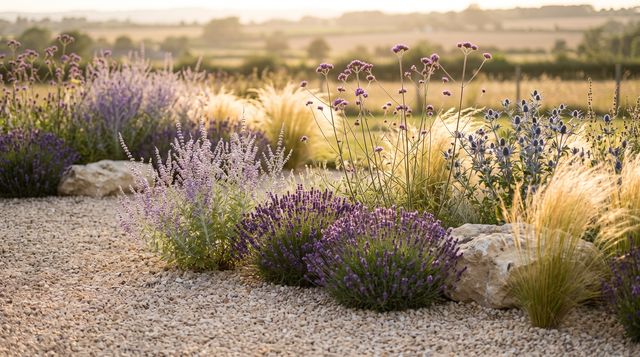
Silver foliage, pale stone and heat-loving plants. A Mediterranean garden looks generous on very little water, as long as the drainage is right.
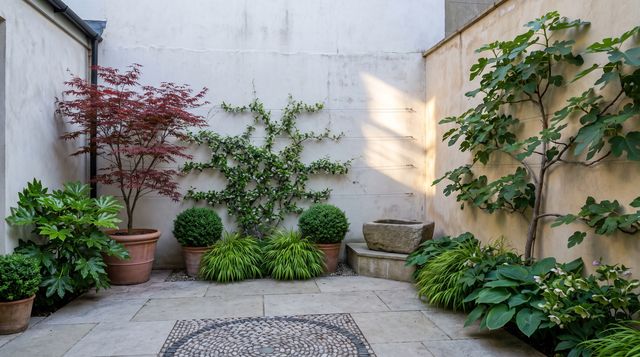
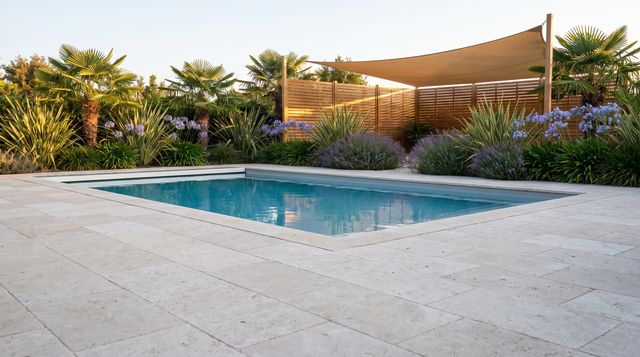
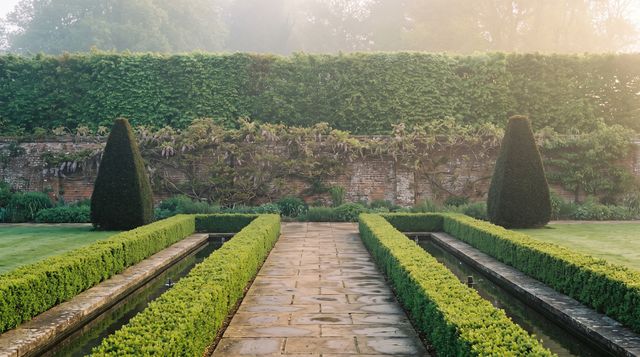
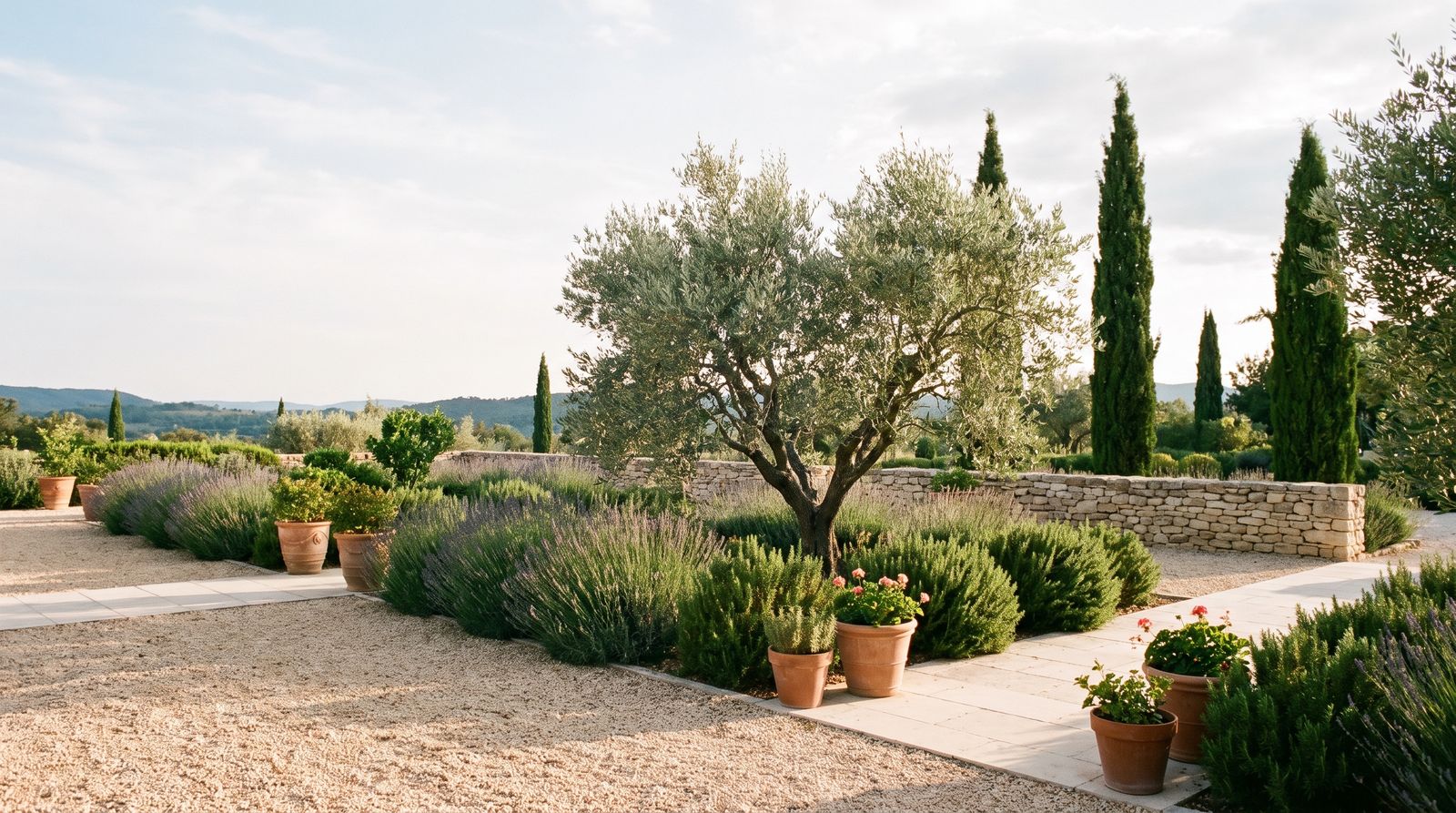
AI-generated concept image
- Light
- Full sun
- Water
- Low
- Upkeep
- Low
- Color
- Warm
- Planting survives
- 18 °F / −8 °C
Getting it right
Start with the ground, not the plants. Mediterranean plants die in wet soil far more often than in cold, so work 4–6 inches (10–15 cm) of coarse grit or pea gravel into the bed before planting, and raise the soil slightly anywhere water sits. Space plants farther apart than feels natural; silver-leaved shrubs need air moving through them. Then mulch with the same gravel you used on the paths, so the whole yard reads as one surface instead of beds cut into a lawn.
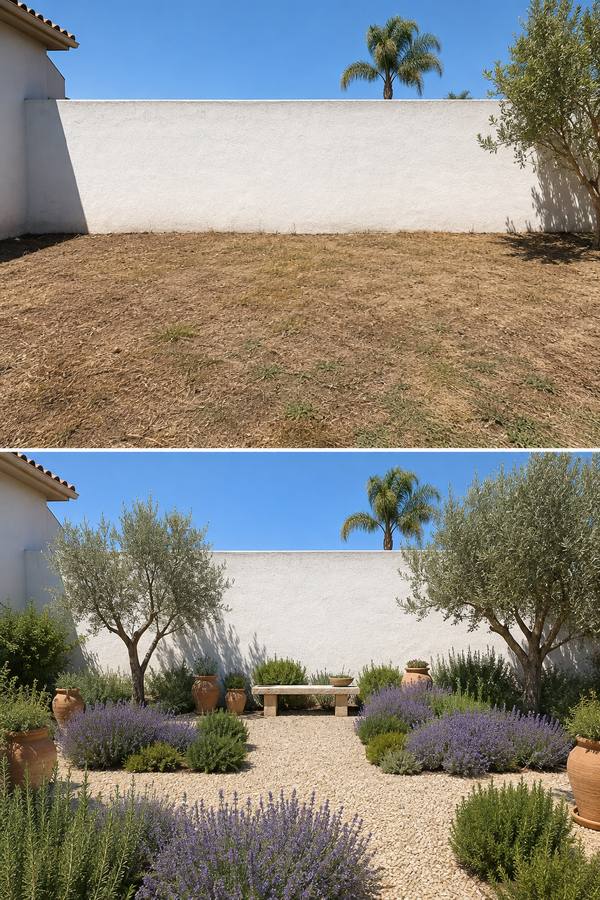
Before and after
Top: before. Bottom: after. AI-generated illustrations of the idea; a design made from your own photo will look different.
How to plan it
In the US this style is most at home in California, the Southwest and Texas, where summers are dry and winters mild. Olive only takes brief dips to about 18 °F (−8 °C), and bay and Italian cypress not much lower, so in colder regions keep the look and change the cast: let English lavender, rosemary in a sheltered spot and a grapevine on the pergola carry it, and grow the olive in a large pot that spends winter in a garage.
Lay it out around one sunny sitting area on gravel or limestone pavers, shaded by a wood pergola with a grapevine over it. Group the shrubs in drifts of three to five and let a few taller plants, an olive or a pair of cypresses, punctuate the gravel. Leave lawn out of it entirely; a Mediterranean yard reads best as stone, gravel and planting.
Water deeply and infrequently for the first summer, then only through long heat waves. Trim lavender and lavender cotton lightly right after flowering, never back into bare wood, and shape rosemary and germander into loose mounds once a year.
Plants that work
| Plant | Type | Light | Water | Height | Hardy to |
|---|---|---|---|---|---|
| OliveOlea europaea | Tree · Evergreen | Full sun | Low | 10–26 ft (3–8 m) | 18 °F / −8 °C |
| English lavenderLavandula angustifolia | Shrub · Evergreen | Full sun | Low | 16–28 in (40–70 cm) | −4 °F / −20 °C |
| RosemarySalvia rosmarinus | Shrub · Evergreen | Full sun | Low | 2–5 ft (0.6–1.5 m) | 10 °F / −12 °C |
| Italian cypressCupressus sempervirens | Conifer · Evergreen | Full sun | Low | 16–39 ft (5–12 m) | 10 °F / −12 °C |
| Lavender cottonSantolina chamaecyparissus | Shrub · Evergreen | Full sun | Low | 16–24 in (40–60 cm) | 5 °F / −15 °C |
| Purple rock roseCistus × purpureus | Shrub · Evergreen | Full sun | Low | 3–4 ft (0.8–1.2 m) | 14 °F / −10 °C |
| Jerusalem sagePhlomis fruticosa | Shrub · Evergreen | Full sun | Low | 3–4 ft (0.8–1.2 m) | 10 °F / −12 °C |
| Bush germanderTeucrium fruticans | Shrub · Evergreen | Full sun | Low | 3–7 ft (1–2 m) | 18 °F / −8 °C |
| Bay laurelLaurus nobilis | Shrub · Evergreen | Partial shade | Low | 7–16 ft (2–5 m) | 14 °F / −10 °C |
| Mexican feather grassNassella tenuissimaInvasive in parts of the US. Check your state's list. | Grass · Semi-evergreen | Full sun | Low | 16–24 in (40–60 cm) | −4 °F / −20 °C |
| Lily of the NileAgapanthus praecox | Perennial · Semi-evergreen | Full sun | Moderate | 2–3 ft (0.6–1 m) | 18 °F / −8 °C |
| GrapevineVitis vinifera | Climber · Deciduous | Full sun | Low | 10–26 ft (3–8 m) | 0 °F / −18 °C |
Surfaces and materials
- Limestone gravel
- Limestone pavers
- Dry-stacked stone wall
- Terracotta pots
- Wood pergola
- Stone water basin
- Uplighting
Works well when
- Summers are hot and dry
- The soil is sandy and free-draining
- It gets sun for most of the day
- Watering is restricted in summer
- You want low maintenance
Think twice when
- Winters bring hard, sustained frost
- The soil is heavy clay
- The ground stays wet after rain
Common questions
Can I have a Mediterranean garden in a cold climate?
You can have the look. The plants on this page range from olive, which takes about 18 °F (−8 °C), to English lavender at about −4 °F (−20 °C). In colder zones, build around the hardiest plants, keep olive and bay in pots, and make the drainage sharp, because wet cold kills more of these plants than dry cold.
Do Mediterranean plants need fertilizer?
Very little. Rich soil and regular feeding produce soft, floppy growth that rots in winter. Plant into lean, gritty soil and skip fertilizer unless a plant is clearly struggling.
What gravel works best?
Pale, angular gravel around 3/8 to 3/4 inch (10–20 mm), spread about 2 inches (5 cm) deep. Angular stone locks together and is easier to walk on than round pea gravel, and a pale color bounces heat and light back into the planting.
How much water does a Mediterranean garden need?
Plenty in the first summer while roots establish, usually a deep soak once or twice a week in hot weather. After that, most of these plants manage on rainfall in mild climates, with an occasional deep watering in long dry spells.
See a Mediterranean garden on your own photo
Take a photo of the space as it is today and compare the redesign side by side with the original.

Scan to install