Formal garden ideas
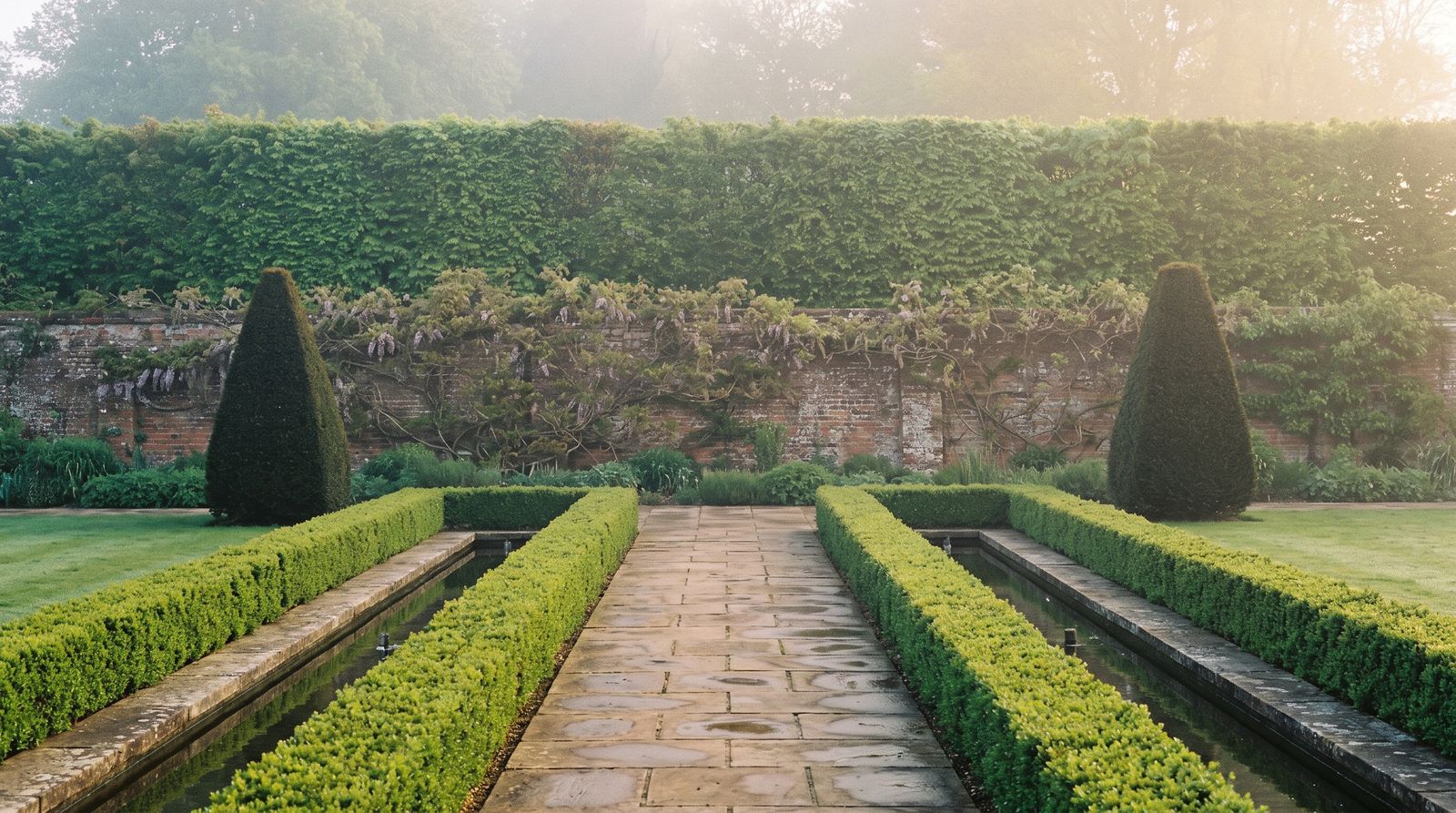
Symmetry, repetition and clipped green architecture. The most demanding style to maintain, and the only one that looks finished in January.
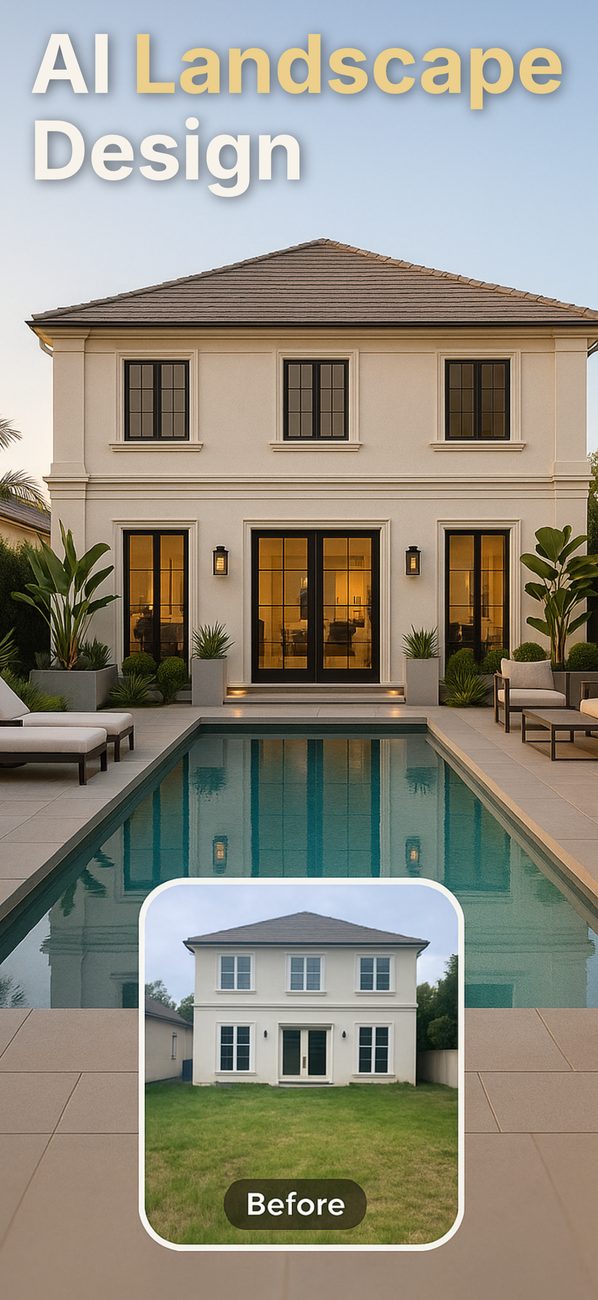
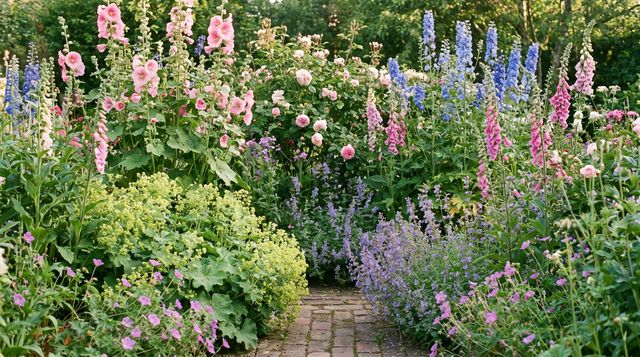
AI-generated concept image
- Light
- Partial shade
- Water
- Moderate
- Upkeep
- High
- Color
- Green-focused
- Planting survives
- −4 °F / −20 °C
Getting it right
Set the axis first, usually from the main window or the door, and build everything symmetrically off that line. Use one hedge plant throughout, because mixing boxwood and yew halves the effect. Be honest about upkeep before committing: boxwood wants clipping once or twice a year, boxwood blight is now common in the eastern US, and box tree moth has reached parts of the Northeast and Midwest, so in a new garden yew or a blight-resistant boxwood is the safer choice. Keep the planting inside the geometry deliberately plain.
How to plan it
Start from the main view, usually the back door, a window or the front walk, and run the central axis straight out from it. Mirror the beds and paths on either side of that line, and end the axis with something worth looking at: a bench, an urn, a fountain or a single tree.
Divide the space into compartments with hedges, typically 12 to 24 inches (30–60 cm) tall for low edging and 4 to 6 feet (1.2–1.8 m) for walls between areas. Fill the compartments with gravel, lawn or one plant in quantity, such as lavender or catmint, which keeps the geometry readable.
Plant edging hedges 12 to 18 inches (30–45 cm) apart and taller hedges about 2 feet (60 cm) apart, and trim lightly and often for the first few years so they thicken from the base. A formal garden only works when it's kept sharp, so plan for clipping once or twice a year, every year.
Plants that work
| Plant | Type | Light | Water | Height | Hardy to |
|---|---|---|---|---|---|
| Common boxwoodBuxus sempervirens | Shrub · Evergreen | Partial shade | Moderate | 1–10 ft (0.3–3 m) | −4 °F / −20 °C |
| English yewTaxus baccata | Conifer · Evergreen | Partial shade | Moderate | 2–16 ft (0.5–5 m) | −4 °F / −20 °C |
| European hornbeamCarpinus betulus | Tree · Deciduous | Partial shade | Moderate | 5–49 ft (1.5–15 m) | −22 °F / −30 °C |
| European beechFagus sylvatica | Tree · Deciduous | Partial shade | Moderate | 5–82 ft (1.5–25 m) | −22 °F / −30 °C |
| Shrub roseRosa (shrub cultivars) | Shrub · Deciduous | Full sun | Moderate | 3–6 ft (0.8–1.8 m) | −13 °F / −25 °C |
| English lavenderLavandula angustifolia | Shrub · Evergreen | Full sun | Low | 16–28 in (40–70 cm) | −4 °F / −20 °C |
| Lady's mantleAlchemilla mollis | Perennial · Deciduous | Partial shade | Moderate | 12–18 in (30–45 cm) | −22 °F / −30 °C |
| CatmintNepeta × faassenii | Perennial · Deciduous | Full sun | Low | 12–24 in (30–60 cm) | −22 °F / −30 °C |
| Meadow sageSalvia nemorosa | Perennial · Deciduous | Full sun | Low | 16–28 in (40–70 cm) | −22 °F / −30 °C |
| DelphiniumDelphinium elatum | Perennial · Deciduous | Full sun | Moderate | 4–7 ft (1.2–2 m) | −22 °F / −30 °C |
| Smooth hydrangeaHydrangea arborescens 'Annabelle' | Shrub · Deciduous | Partial shade | High | 4–5 ft (1.2–1.5 m) | −22 °F / −30 °C |
| Chinese wisteriaWisteria sinensisInvasive in parts of the US. Check your state's list. | Climber · Deciduous | Full sun | Moderate | 20–39 ft (6–12 m) | −13 °F / −25 °C |
Surfaces and materials
- Sandstone pavers
- Granite cobbles
- Brick wall
- Formal water channel
- Glazed pots
- Lawn
- Uplighting
- Steel pergola
Works well when
- It has to look good in winter
- The yard is flat and featureless
- Curb appeal and resale matter
- You enjoy hands-on gardening
- You want more privacy
Think twice when
- The budget is tight
- You want low maintenance
- The ground slopes steeply
Common questions
What's the best hedge for a formal garden?
Yew is the classic for tall hedges and topiary because it regrows from old wood. For low edging, boxwood is traditional; where boxwood blight is a problem, look at blight-resistant boxwood cultivars or Japanese holly.
Is a formal garden expensive?
More than most styles up front, because hedges are bought in quantity and paths and edges need to be precise. Over the long run the main cost is clipping, whether that's your time or a crew's.
Can a formal garden be small?
Yes. A small symmetrical courtyard with four hedged beds and a central pot is fully formal. Keep the materials few and the lines exact.
Is Chinese wisteria a good choice for a formal pergola?
It's the classic, but Chinese wisteria is invasive in much of the eastern and southern US. American wisteria gives a similar effect, is native, and is far easier to keep in check.
See a formal garden on your own photo
Take a photo of the space as it is today and compare the redesign side by side with the original.

Scan to install