Cottage garden ideas
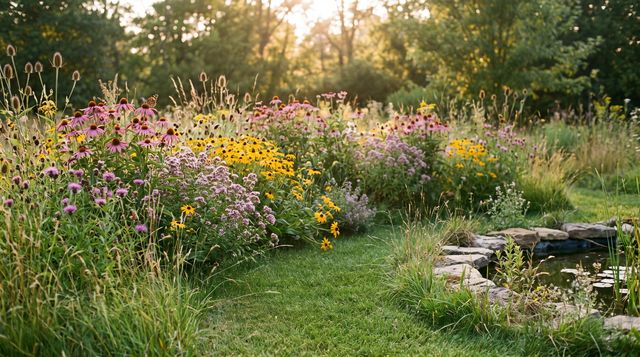
Generous, closely planted and slightly untidy on purpose. A cottage garden earns its looseness by having hard edges and real structure underneath.
AI-generated concept image
- Light
- Full sun
- Water
- Moderate
- Upkeep
- High
- Color
- Pastel
- Planting survives
- −13 °F / −25 °C
Getting it right
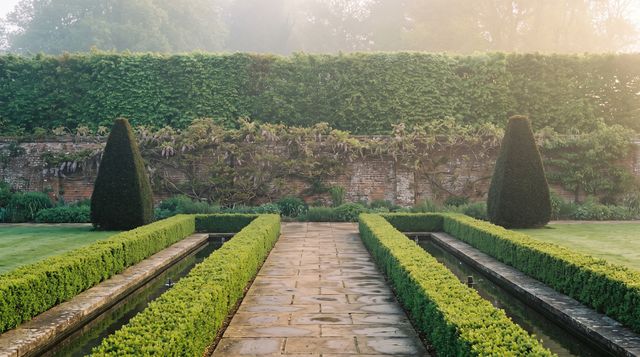
Plant far closer than the labels tell you to; the whole look depends on plants leaning into each other with no bare soil showing. Put the tall things at the back and stake them in May, before they need it, because nothing rescues a collapsed delphinium in July. Then draw one hard line somewhere: a clipped edge, a brick path, a straight lawn edge. Without that single crisp element the border reads as neglected rather than romantic.
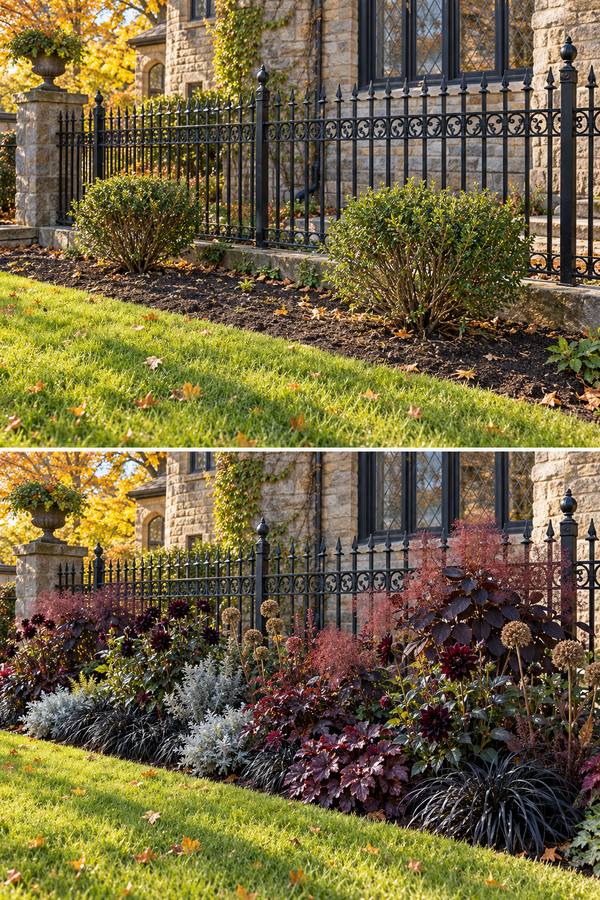
Before and after
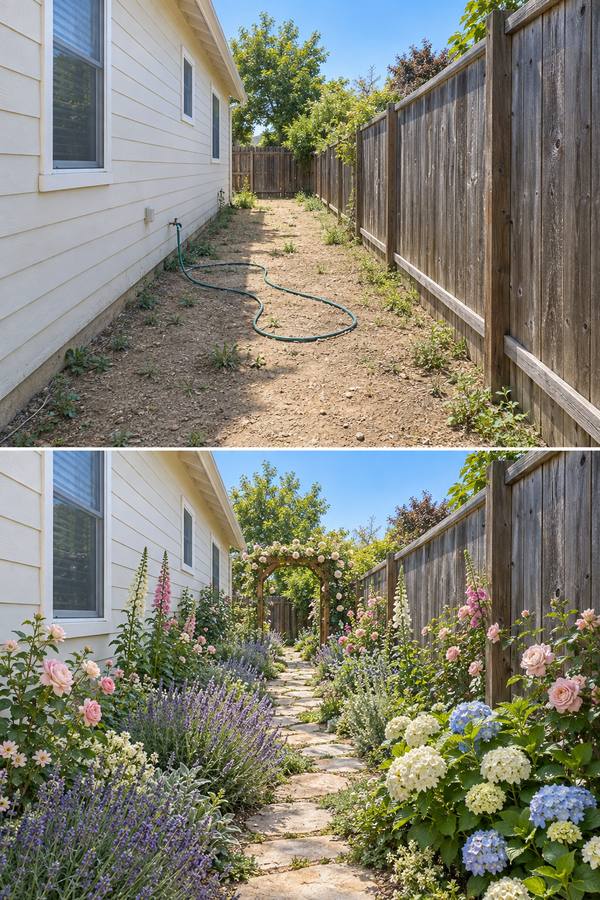
Top: before. Bottom: after. AI-generated illustrations of the idea; a design made from your own photo will look different.
How to plan it
Start with the path. Cottage gardens are walked through rather than looked at, so run a path of brick, flagstone or gravel from the gate or driveway to the door, about 3 feet (90 cm) wide so plants can spill over it and two people can still pass. Then make the beds on either side as deep as the space allows; 4 to 6 feet (1.2–1.8 m) gives room for three layers of height.
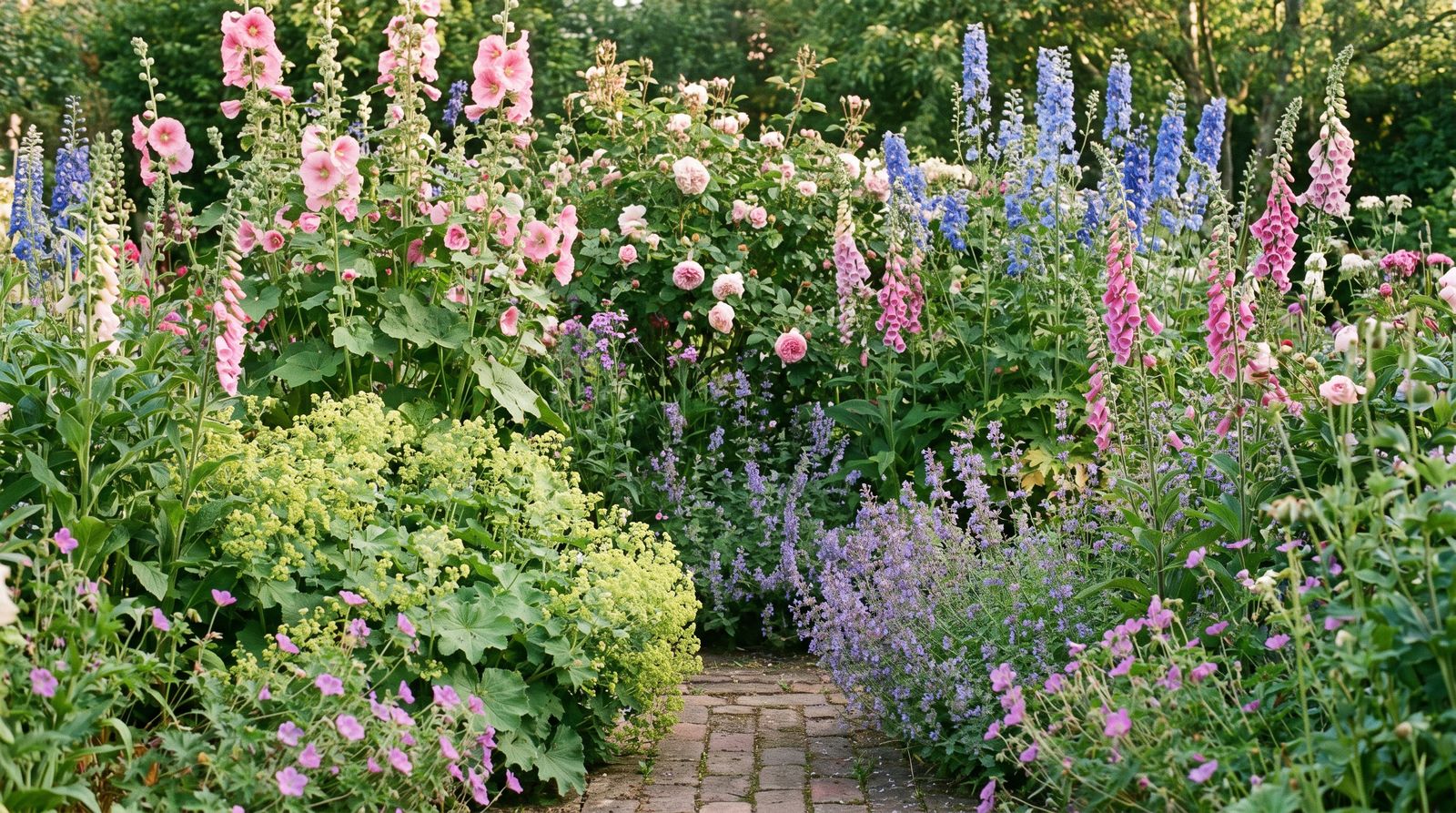
Layer by height and season: a climbing rose or clematis on the house, the fence or an arch; hollyhocks, delphiniums and foxgloves at the back; phlox, lupines and poppies in the middle; catmint, cranesbill and lady's mantle at the front, softening the edge of the path. Repeat a few plants, catmint especially, every few feet so the whole bed hangs together.
Expect real work. A cottage garden needs deadheading through summer, staking in late spring, dividing perennials every few years and a cutback in fall or early spring. Where summers are hot and humid, choose mildew-resistant phlox and lean on heat-tolerant catmint and cranesbill; delphiniums and lupines prefer cool summers and struggle in the South.
Plants that work
| Plant | Type | Light | Water | Height | Hardy to |
|---|---|---|---|---|---|
| Shrub roseRosa (shrub cultivars) | Shrub · Deciduous | Full sun | Moderate | 3–6 ft (0.8–1.8 m) | −13 °F / −25 °C |
| DelphiniumDelphinium elatum | Perennial · Deciduous | Full sun | Moderate | 4–7 ft (1.2–2 m) | −22 °F / −30 °C |
| FoxgloveDigitalis purpurea | Perennial · Deciduous | Partial shade | Moderate | 3–5 ft (0.9–1.5 m) | −13 °F / −25 °C |
| HollyhockAlcea rosea | Perennial · Deciduous | Full sun | Moderate | 5–8 ft (1.5–2.5 m) | −13 °F / −25 °C |
| LupineLupinus polyphyllus | Perennial · Deciduous | Full sun | Moderate | 3–4 ft (0.8–1.2 m) | −22 °F / −30 °C |
| Oriental poppyPapaver orientale | Perennial · Deciduous | Full sun | Low | 2–3 ft (60–90 cm) | −22 °F / −30 °C |
| CatmintNepeta × faassenii | Perennial · Deciduous | Full sun | Low | 12–24 in (30–60 cm) | −22 °F / −30 °C |
| Cranesbill geraniumGeranium 'Rozanne' | Perennial · Deciduous | Partial shade | Moderate | 16–24 in (40–60 cm) | −13 °F / −25 °C |
| ColumbineAquilegia vulgaris | Perennial · Deciduous | Partial shade | Moderate | 20–31 in (50–80 cm) | −22 °F / −30 °C |
| Garden phloxPhlox paniculata | Perennial · Deciduous | Full sun | Moderate | 3–4 ft (0.8–1.2 m) | −22 °F / −30 °C |
| Lady's mantleAlchemilla mollis | Perennial · Deciduous | Partial shade | Moderate | 12–18 in (30–45 cm) | −22 °F / −30 °C |
| Italian clematisClematis viticella | Climber · Deciduous | Partial shade | Moderate | 8–13 ft (2.5–4 m) | −22 °F / −30 °C |
Surfaces and materials
- Reclaimed brick
- Decomposed granite
- Woven wattle fence
- Trellis
- Compost mulch
- Terracotta pots
- Lawn
Works well when
- You enjoy hands-on gardening
- Pollinators matter to you
- The soil is heavy clay
- It gets sun for most of the day
- Curb appeal and resale matter
Think twice when
- You want low maintenance
- Summers are hot and dry
- The site is open and windy
Common questions
What is a cottage garden?
An informal, densely planted mix of flowers, herbs and climbers, usually along a path to the door, with little bare soil and plenty of self-seeding plants. It began as the working gardens of English cottages and is now one of the most popular ways to plant a front yard.
What are the easiest cottage garden plants?
Catmint, cranesbill geranium, lady's mantle, columbine and garden phlox come back reliably with little fuss. Foxgloves and hollyhocks are usually biennial: they flower in their second year, then seed themselves around.
Can I have a cottage garden in the front yard?
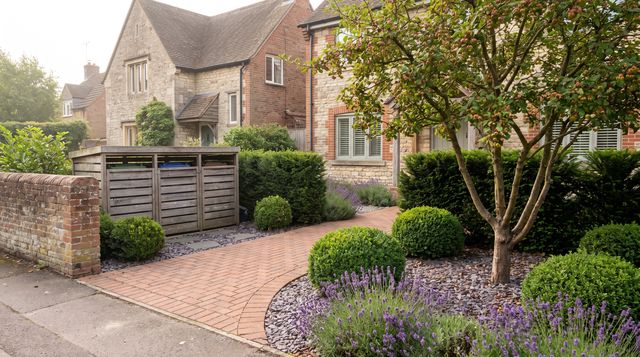
Yes, and it's a classic use of the style. Keep one crisp edge, such as a low hedge, a picket fence or a neat strip of lawn, so the planting reads as intentional from the street, and check any HOA rules on plant height near the sidewalk.
When should I plant a cottage garden?
Spring or early fall. Fall planting gives perennials time to root before winter, and they flower more strongly the next summer. Sow annuals such as cosmos and larkspur in spring to fill the gaps in the first year.
Are cottage garden plants safe for children and pets?
Not all of them. Foxglove, delphinium and lupine are poisonous if eaten. If small children or pets use the yard, keep those at the back of the bed or leave them out.
See a cottage garden on your own photo
Take a photo of the space as it is today and compare the redesign side by side with the original.

Scan to install