Front yard landscaping ideas
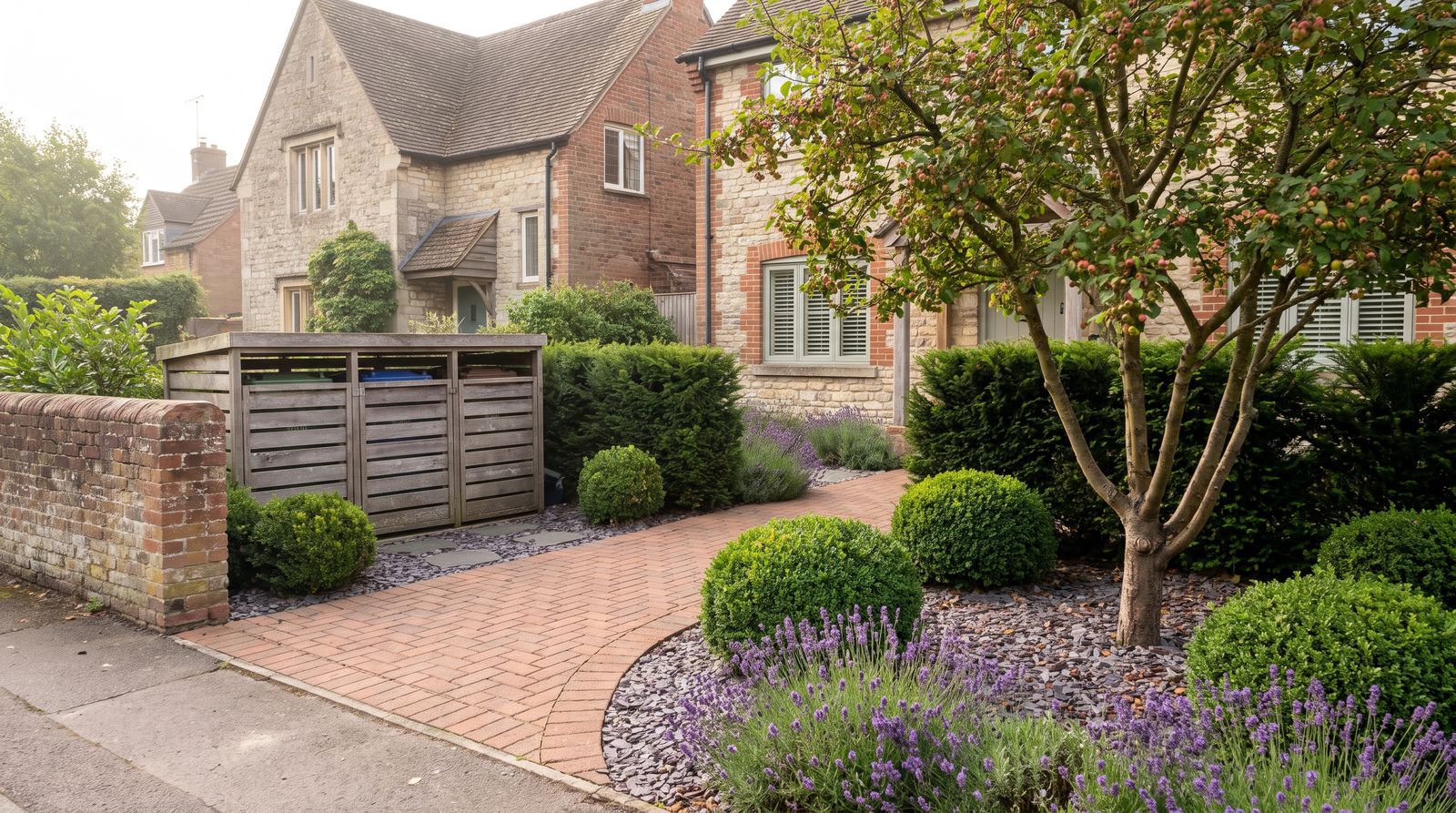
The front yard is the one everybody sees and nobody has time for. It has to look right in February and still hide the trash cans.
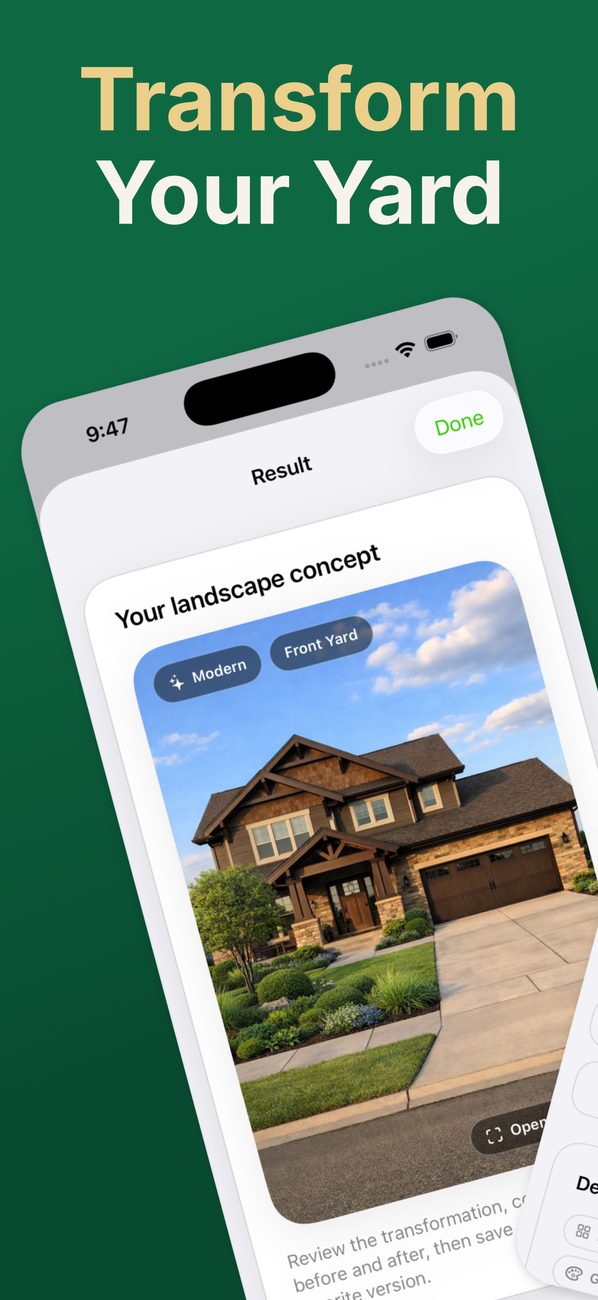
AI-generated concept image
- Light
- Partial shade
- Water
- Low
- Upkeep
- Low
- Color
- Green-focused
- Planting survives
- −4 °F / −20 °C
Getting it right
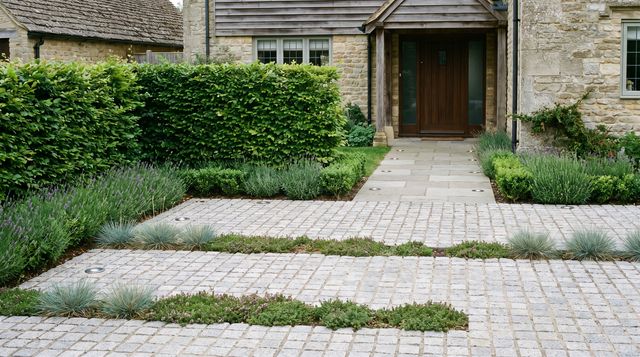
Solve the logistics first: the trash and recycling cans, the bikes, the walk from the car. A beautiful front yard with nowhere to put the recycling gets undone within a year. Then plant for the two months you'd rather not think about: evergreen structure at 16–24 inches (40–60 cm), one small tree for scale, and a repeated groundcover instead of bare mulch. Hold it to three kinds of plant repeated many times. A front yard is seen at walking pace, and variety just reads as clutter.
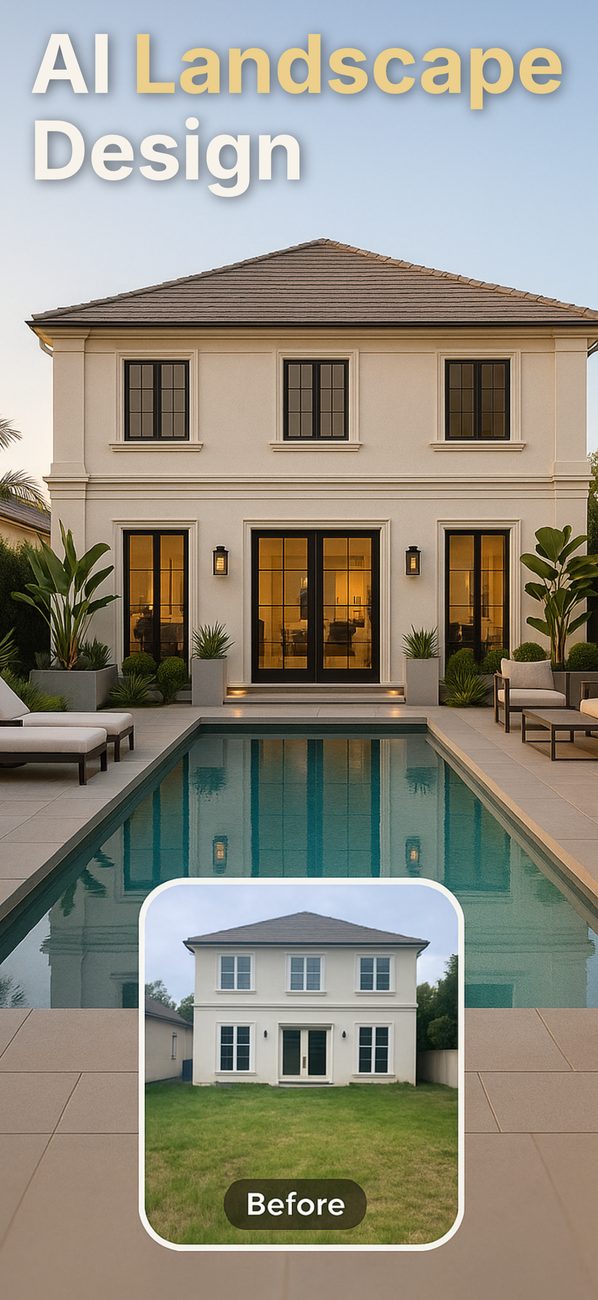
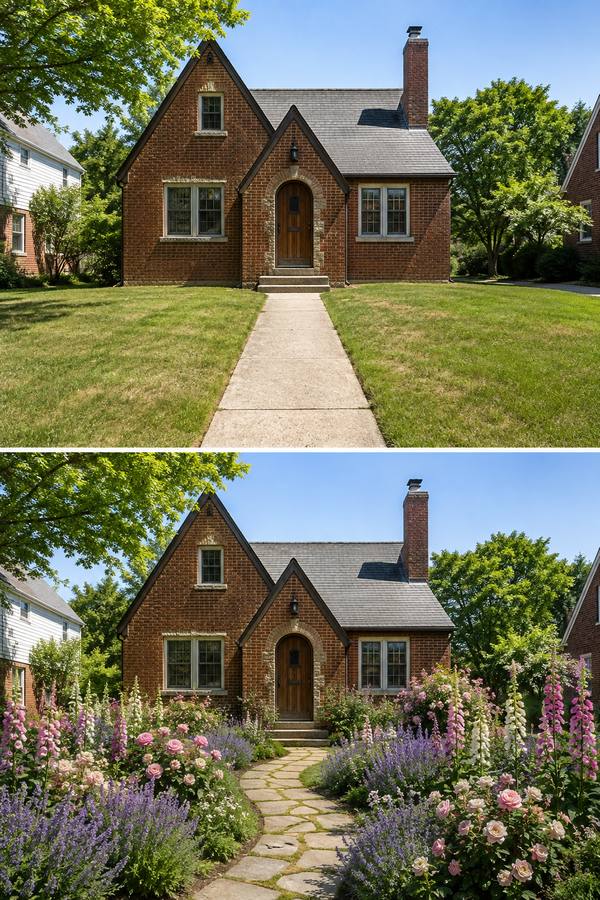
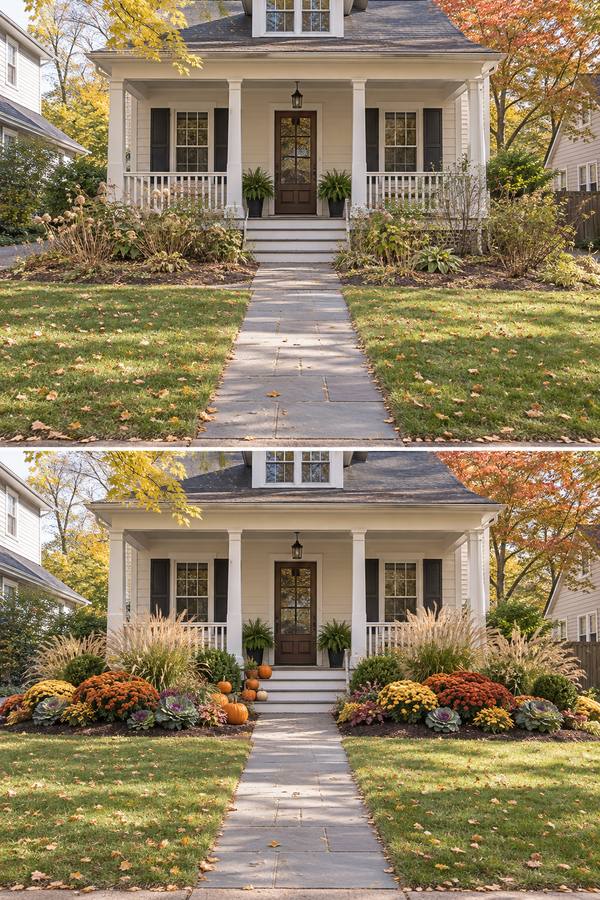
Before and after
Top: before. Bottom: after. AI-generated illustrations of the idea; a design made from your own photo will look different.
How to plan it
Start at the front door and work outward. The walk should be at least 4 feet (1.2 m) wide so two people can walk side by side, and it should lead clearly to the door; if visitors head for the garage instead, widen the walk or add a path from the driveway. Frame the entrance with something evergreen on each side or a pair of large planters.
Then deal with the lawn. Many front yards are mostly grass because nobody decided otherwise. Shrink it to a simple shape with a clean edge, or replace part of it with a wide bed along the house and the walk. Foundation beds look best at least 4 to 6 feet (1.2–1.8 m) deep, with shrubs set far enough from the wall to reach their full size.
Finish with one small tree, set off to one side and at least 15 feet (4.5 m) from the house, such as a serviceberry or a crabapple, and low lights along the walk. Check HOA rules and your city's sidewalk and corner-visibility rules before planting anything tall near the street.
Plants that work
| Plant | Type | Light | Water | Height | Hardy to |
|---|---|---|---|---|---|
| ServiceberryAmelanchier lamarckii | Tree · Deciduous | Full sun | Moderate | 10–20 ft (3–6 m) | −22 °F / −30 °C |
| CrabappleMalus 'Evereste' | Tree · Deciduous | Full sun | Moderate | 10–16 ft (3–5 m) | −22 °F / −30 °C |
| Common boxwoodBuxus sempervirens | Shrub · Evergreen | Partial shade | Moderate | 1–10 ft (0.3–3 m) | −4 °F / −20 °C |
| Japanese hollyIlex crenata | Shrub · Evergreen | Partial shade | Moderate | 2–8 ft (0.6–2.5 m) | −4 °F / −20 °C |
| English lavenderLavandula angustifolia | Shrub · Evergreen | Full sun | Low | 16–28 in (40–70 cm) | −4 °F / −20 °C |
| Panicle hydrangeaHydrangea paniculata | Shrub · Deciduous | Full sun | Moderate | 5–8 ft (1.5–2.5 m) | −22 °F / −30 °C |
| Bigroot geraniumGeranium macrorrhizum | Groundcover · Semi-evergreen | Partial shade | Low | 12–16 in (30–40 cm) | −22 °F / −30 °C |
| Heartleaf bergeniaBergenia cordifolia | Perennial · Evergreen | Partial shade | Low | 12–18 in (30–45 cm) | −22 °F / −30 °C |
| Japanese forest grassHakonechloa macra | Grass · Deciduous | Partial shade | Moderate | 14–20 in (35–50 cm) | −13 °F / −25 °C |
| Blue fescueFestuca glauca | Grass · Evergreen | Full sun | Low | 8–12 in (20–30 cm) | −22 °F / −30 °C |
| Creeping thymeThymus serpyllum | Groundcover · Evergreen | Full sun | Low | 2–4 in (5–10 cm) | −22 °F / −30 °C |
| Japanese spurgePachysandra terminalis | Groundcover · Evergreen | Shade | Moderate | 8–12 in (20–30 cm) | −13 °F / −25 °C |
Surfaces and materials
- Clay pavers
- Granite cobbles
- Decomposed granite
- Galvanized steel edging
- Path lighting
- Brick wall
- Gravel mulch
Works well when
- Curb appeal and resale matter
- You want low maintenance
- The yard is small
- It faces north
- It has to look good in winter
Think twice when
- You want to grow food
- Young children play there
- The ground stays wet after rain
Common questions
What's the cheapest way to improve curb appeal?
Edge the lawn and beds crisply, add fresh mulch, put a pair of matching pots by the door, and replace overgrown shrubs that cover the windows. Those changes cost little and do more than one expensive feature.
What are the best low-maintenance plants for a front yard?
Evergreen shrubs that hold their shape, like Japanese holly and boxwood, long-flowering shrubs such as panicle hydrangea, and dense groundcovers like bigroot geranium that shade out weeds. Plant fewer kinds in larger numbers.
How far from the house should I plant shrubs?
At least half the shrub's mature width plus about a foot (30 cm), so a shrub that grows 4 feet (1.2 m) wide goes about 3 feet (90 cm) out from the wall. That keeps air moving, leaves room to paint, and keeps roots and moisture off the foundation.
Should I get rid of my front lawn?
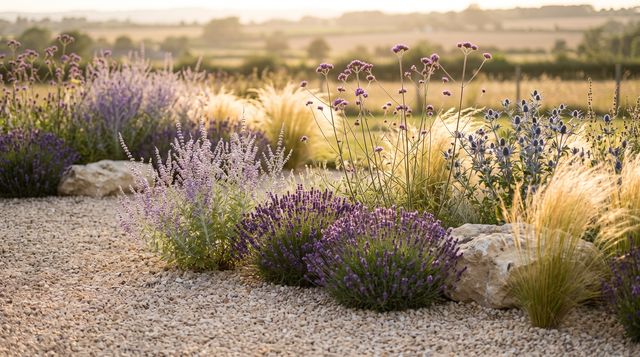
Not necessarily, but most front lawns are bigger than they need to be. Keeping a simple panel of grass and widening the beds around it usually looks better and cuts mowing; in dry regions, a gravel garden or native planting saves the most water.
See a new front yard on your own photo
Take a photo of the space as it is today and compare the redesign side by side with the original.

Scan to install