Driveway landscaping ideas
A driveway is the largest hard surface most homes have, and the one most likely to be done badly.
AI-generated concept image
- Light
- Full sun
- Water
- Low
- Upkeep
- Low
- Color
- Neutral
- Planting survives
- −4 °F / −20 °C
Getting it right
Deal with the water first. Many towns now limit how much of a lot can be paved or have stormwater rules for new driveways, and fixing drainage later is expensive. Keep parked cars off the approach to the front door so arriving on foot still feels like arriving. Break up a large expanse with a band of cobbles or a planted strip every few yards. And plant only tough, low things along the edges, because car doors, road salt and reversing wheels will find anything precious.
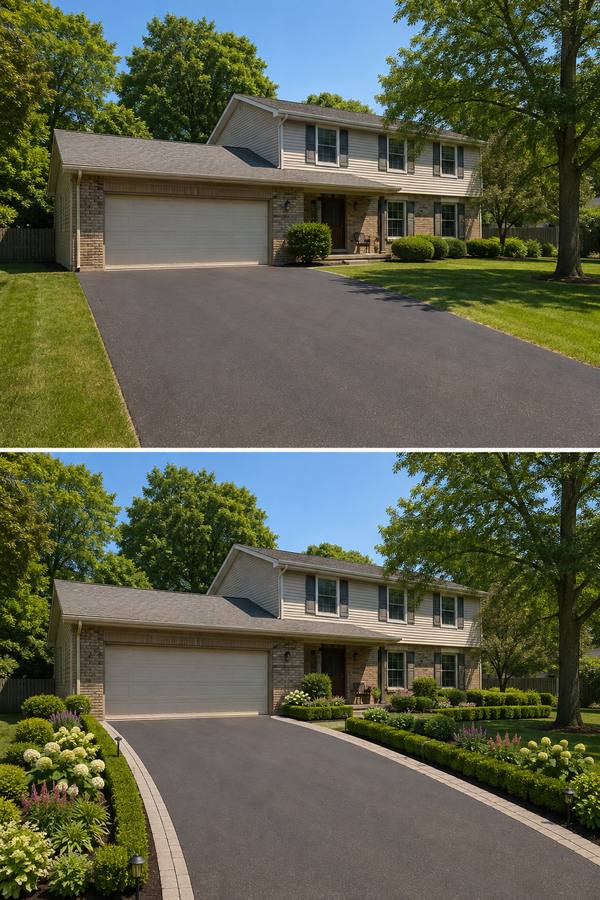
Before and after
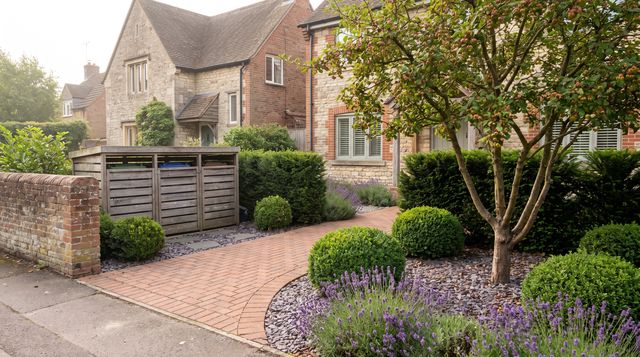
Top: before. Bottom: after. AI-generated illustrations of the idea; a design made from your own photo will look different.
How to plan it
Size it properly. A single car needs a driveway about 10 to 12 feet (3–3.7 m) wide, and two cars side by side about 20 to 24 feet (6–7.3 m). If you often back out onto a busy street, a turnaround space is worth more than any planting.
Edge the driveway with a band of contrasting material, such as granite cobbles or clay pavers, which makes even plain asphalt or concrete look finished. A planted strip between the driveway and the front walk, or a wide bed at the mouth of the driveway, separates cars from people and frames the entrance.
Leave a clear strip about 2 feet (60 cm) wide along the edges for snow piles and car doors, with only low groundcovers in it, and put taller plants such as a crabapple or a hornbeam hedge farther back. Low path or bollard lights along the edge help at night without glaring into the house.
Plants that work
| Plant | Type | Light | Water | Height | Hardy to |
|---|---|---|---|---|---|
| European hornbeamCarpinus betulus | Tree · Deciduous | Partial shade | Moderate | 5–49 ft (1.5–15 m) | −22 °F / −30 °C |
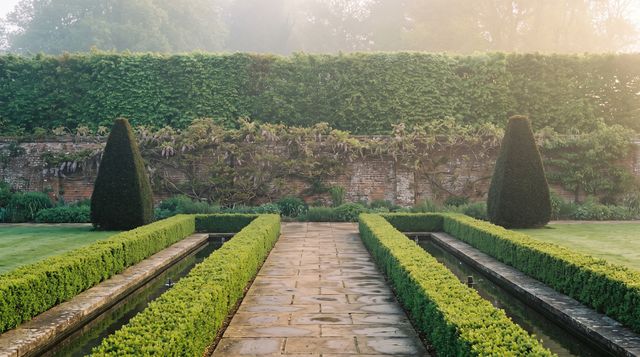
| Common boxwoodBuxus sempervirens | Shrub · Evergreen | Partial shade | Moderate | 1–10 ft (0.3–3 m) | −4 °F / −20 °C |
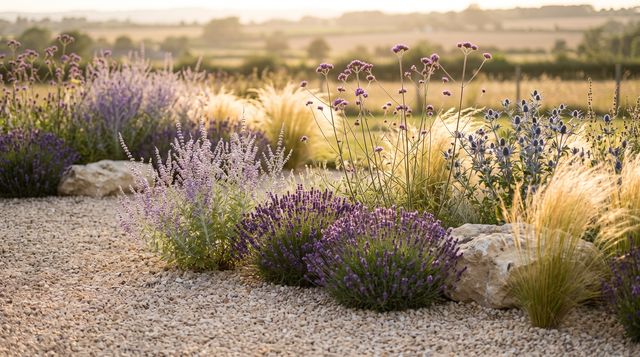
| English lavenderLavandula angustifolia | Shrub · Evergreen | Full sun | Low | 16–28 in (40–70 cm) | −4 °F / −20 °C |
| Creeping thymeThymus serpyllum | Groundcover · Evergreen | Full sun | Low | 2–4 in (5–10 cm) | −22 °F / −30 °C |
| Blue fescueFestuca glauca | Grass · Evergreen | Full sun | Low | 8–12 in (20–30 cm) | −22 °F / −30 °C |
| Bearberry cotoneasterCotoneaster dammeri | Groundcover · Evergreen | Full sun | Low | 8–12 in (20–30 cm) | −13 °F / −25 °C |
| Boxleaf honeysuckleLonicera pileata | Shrub · Evergreen | Partial shade | Low | 20–31 in (50–80 cm) | −4 °F / −20 °C |
| Bigroot geraniumGeranium macrorrhizum | Groundcover · Semi-evergreen | Partial shade | Low | 12–16 in (30–40 cm) | −22 °F / −30 °C |
| Panicle hydrangeaHydrangea paniculata | Shrub · Deciduous | Full sun | Moderate | 5–8 ft (1.5–2.5 m) | −22 °F / −30 °C |
| Japanese hollyIlex crenata | Shrub · Evergreen | Partial shade | Moderate | 2–8 ft (0.6–2.5 m) | −4 °F / −20 °C |
| White stonecropSedum album | Succulent · Evergreen | Full sun | Low | 2–6 in (5–15 cm) | −22 °F / −30 °C |
| CrabappleMalus 'Evereste' | Tree · Deciduous | Full sun | Moderate | 10–16 ft (3–5 m) | −22 °F / −30 °C |
Surfaces and materials
- Granite cobbles
- Clay pavers
- Resin-bound gravel
- Decomposed granite
- Galvanized steel edging
- Path lighting
- Brick wall
Works well when
- Curb appeal and resale matter
- You want low maintenance
- The ground stays wet after rain
- It gets sun for most of the day
- It has to look good in winter
Think twice when
- The budget is tight
- You want to grow food
- It is shaded for most of the day
Common questions
What's the cheapest driveway surface?
Gravel, by a wide margin, followed by asphalt; concrete costs more, and pavers or cobbles the most. Gravel needs topping up and raking and is harder to clear of snow.
What plants tolerate road salt?
Low, tough plants like white stonecrop, blue fescue and bearberry cotoneaster cope better than most, but nothing enjoys salt. Keep planting a couple of feet back from where plowed snow lands, and water the beds well in spring to flush the salt out.
What is permeable paving?
A surface that lets rain soak through to the ground: permeable pavers with gravel-filled joints, reinforced gravel grids, or porous asphalt and concrete. It cuts runoff and puddles, and some towns encourage or require it.
How do I make a long driveway look better?
Line it with one tree or shrub repeated at regular intervals, edge it with a contrasting band, and light the curves. Repetition is what makes a long driveway look deliberate.
See a new driveway entrance on your own photo
Take a photo of the space as it is today and compare the redesign side by side with the original.

Scan to install