Patio ideas
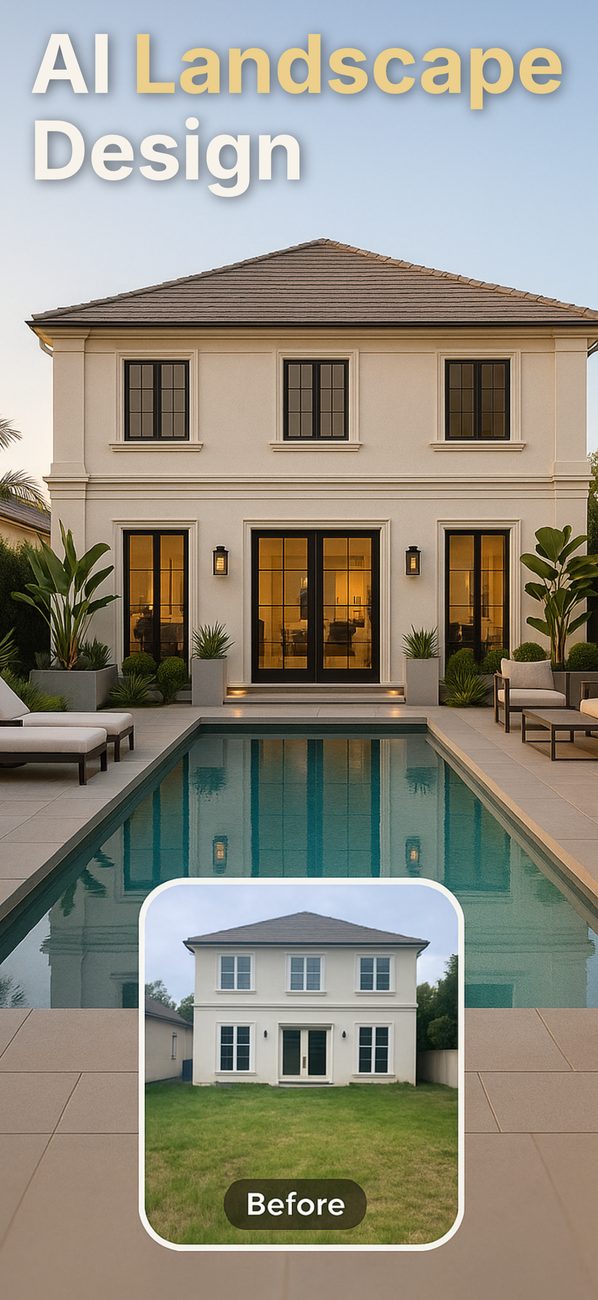
Most patios are built too small and too gray. The size of the table decides everything else about them.
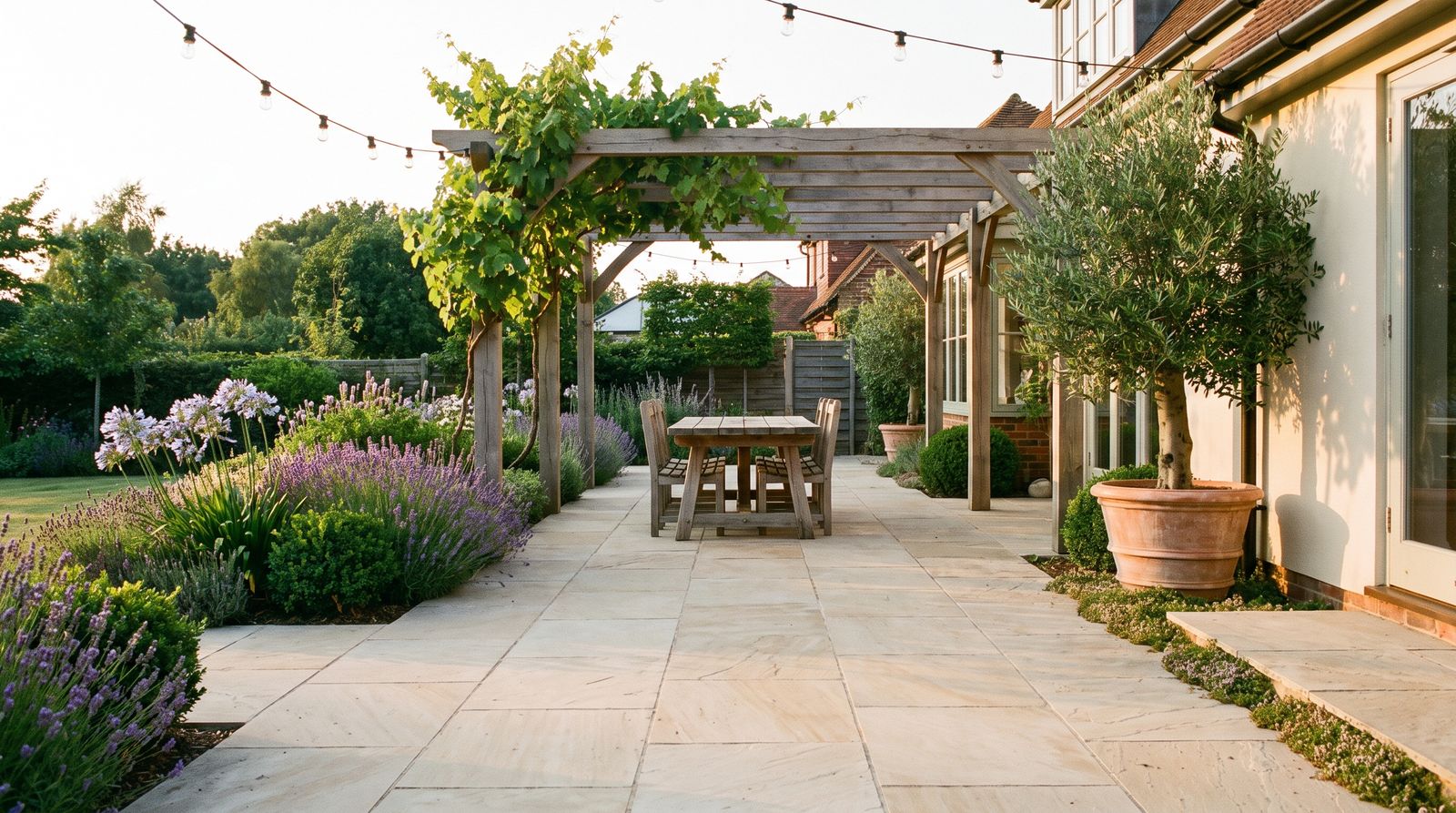
AI-generated concept image
- Light
- Full sun
- Water
- Low
- Upkeep
- Low
- Color
- Neutral
- Planting survives
- 18 °F / −8 °C
Getting it right
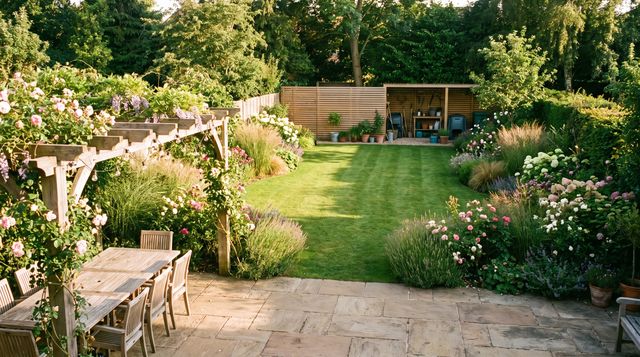
Measure outward from the furniture: a table for six needs a clear area of about 12 by 12 feet (3.5 × 3.5 m), and a grill or bench adds another 3 feet (1 m). Slope the surface about 1/8 to 1/4 inch per foot (1–2%) away from the house, and keep it below the door threshold and clear of the siding. Then break up the gray: a 2-foot (60 cm) planted border along at least one long side, creeping thyme in the joints at the edges, and one large pot where the paving meets the lawn.
How to plan it
Put the patio where you'll actually use it. Right outside the kitchen door is convenient for meals; a second spot farther out, in evening sun or under a tree, often gets more use for relaxing. Watch where sun and shade fall at the times you'd sit outside before deciding.
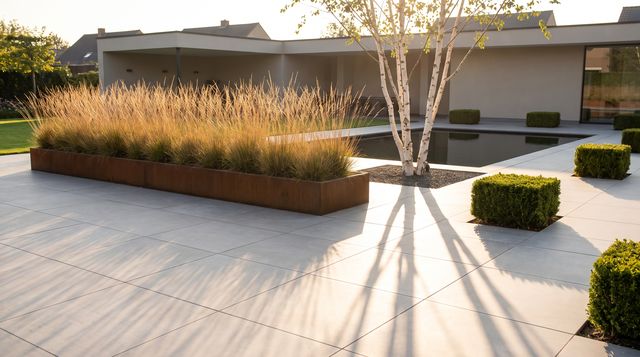
Choose the surface. Concrete pavers are the budget option; natural stone such as sandstone or limestone looks warmer but varies in thickness; porcelain pavers are thin, hard and stain-resistant. All of them need a compacted gravel base, typically 4 to 6 inches (10–15 cm) deep, and more where the ground freezes hard.
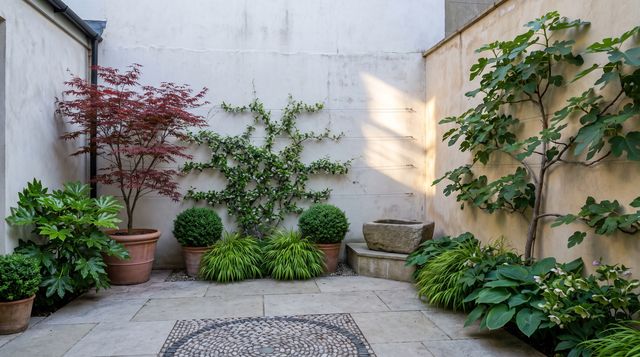
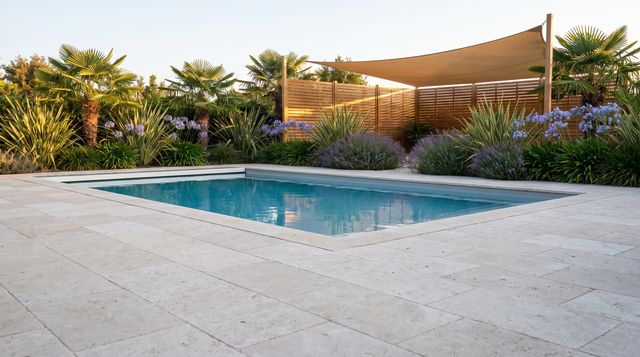
Soften the edges with planting, shade and light: a pergola with a vine or a shade sail for midday sun, a border of lavender, grasses or hostas along at least one side, creeping thyme between the edge pavers, and string lights or low uplights for the evenings.
Plants that work
| Plant | Type | Light | Water | Height | Hardy to |
|---|---|---|---|---|---|
| OliveOlea europaea | Tree · Evergreen | Full sun | Low | 10–26 ft (3–8 m) | 18 °F / −8 °C |
| English lavenderLavandula angustifolia | Shrub · Evergreen | Full sun | Low | 16–28 in (40–70 cm) | −4 °F / −20 °C |
| Lily of the NileAgapanthus praecox | Perennial · Semi-evergreen | Full sun | Moderate | 2–3 ft (0.6–1 m) | 18 °F / −8 °C |
| Star jasmineTrachelospermum jasminoides | Climber · Evergreen | Partial shade | Moderate | 10–20 ft (3–6 m) | 10 °F / −12 °C |
| Chinese wisteriaWisteria sinensisInvasive in parts of the US. Check your state's list. | Climber · Deciduous | Full sun | Moderate | 20–39 ft (6–12 m) | −13 °F / −25 °C |
| Common boxwoodBuxus sempervirens | Shrub · Evergreen | Partial shade | Moderate | 1–10 ft (0.3–3 m) | −4 °F / −20 °C |
| Mondo grassOphiopogon japonicus | Groundcover · Evergreen | Partial shade | Moderate | 6–10 in (15–25 cm) | 5 °F / −15 °C |
| Creeping thymeThymus serpyllum | Groundcover · Evergreen | Full sun | Low | 2–4 in (5–10 cm) | −22 °F / −30 °C |
| HostaHosta (hybrids) | Perennial · Deciduous | Shade | Moderate | 12–31 in (30–80 cm) | −31 °F / −35 °C |
| Chinese silver grass (miscanthus)Miscanthus sinensisInvasive in parts of the US. Check your state's list. | Grass · Deciduous | Full sun | Moderate | 4–7 ft (1.2–2 m) | −13 °F / −25 °C |
| RosemarySalvia rosmarinus | Shrub · Evergreen | Full sun | Low | 2–5 ft (0.6–1.5 m) | 10 °F / −12 °C |
| Blue fescueFestuca glauca | Grass · Evergreen | Full sun | Low | 8–12 in (20–30 cm) | −22 °F / −30 °C |
Surfaces and materials
- Porcelain pavers
- Sandstone pavers
- Granite cobbles
- Wood pergola
- Outdoor kitchen
- Fire pit
- String lights
- Glazed pots
Works well when
- You eat outside in the evening
- People walk on it barefoot
- The space is sheltered and warm
- You want low maintenance
- It faces south
Think twice when
- The ground stays wet after rain
- The budget is tight
- It is shaded for most of the day
Common questions
What's the cheapest patio material?
Gravel laid over a compacted base, with an edge to hold it in, is the cheapest. Poured concrete and concrete pavers come next; natural stone and porcelain cost the most but last longest.
How big should my patio be?
About 12 by 12 feet (3.5 × 3.5 m) for a table and six chairs, or about 10 by 10 feet (3 × 3 m) for a table for four, plus room to walk around. Lounge chairs and a grill each need extra space.
Which way should a patio slope?
Away from the house, about 1/8 to 1/4 inch per foot (1–2%), so rain runs into the lawn or a drain rather than toward the foundation.
Can I plant between pavers?
Yes, with low, tough plants such as creeping thyme in wider joints at the edges, where feet and chairs don't constantly cross. Fill those joints with a sandy soil mix rather than polymeric sand.
See a new patio on your own photo
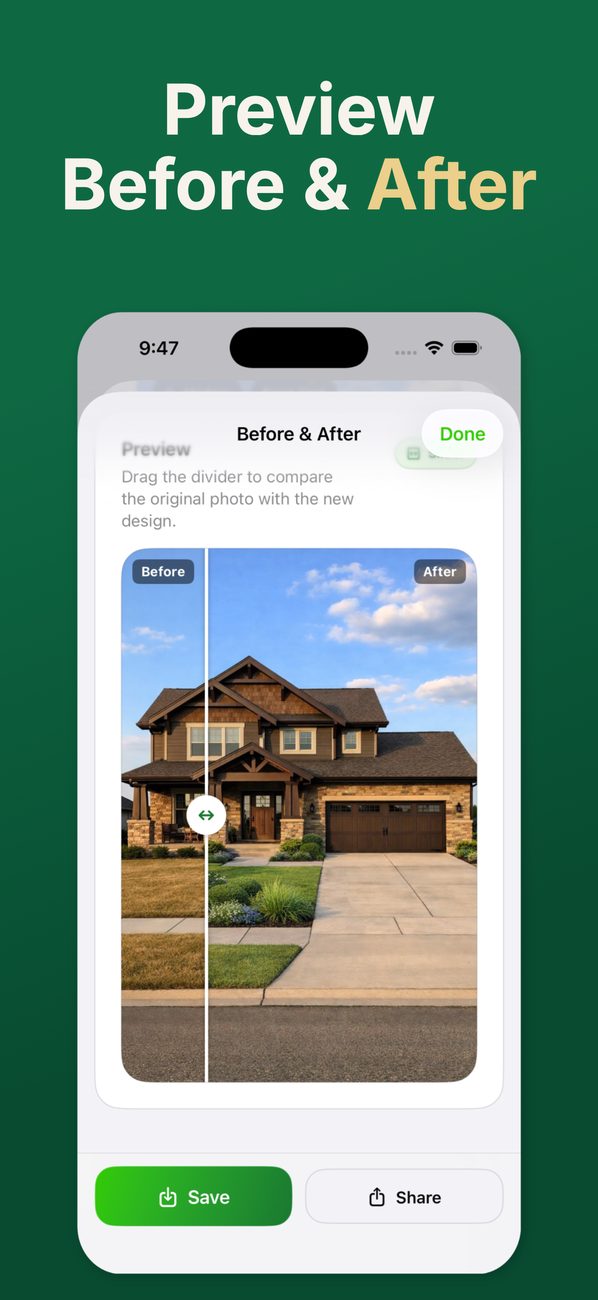
Take a photo of the space as it is today and compare the redesign side by side with the original.

Scan to install