Japanese garden ideas
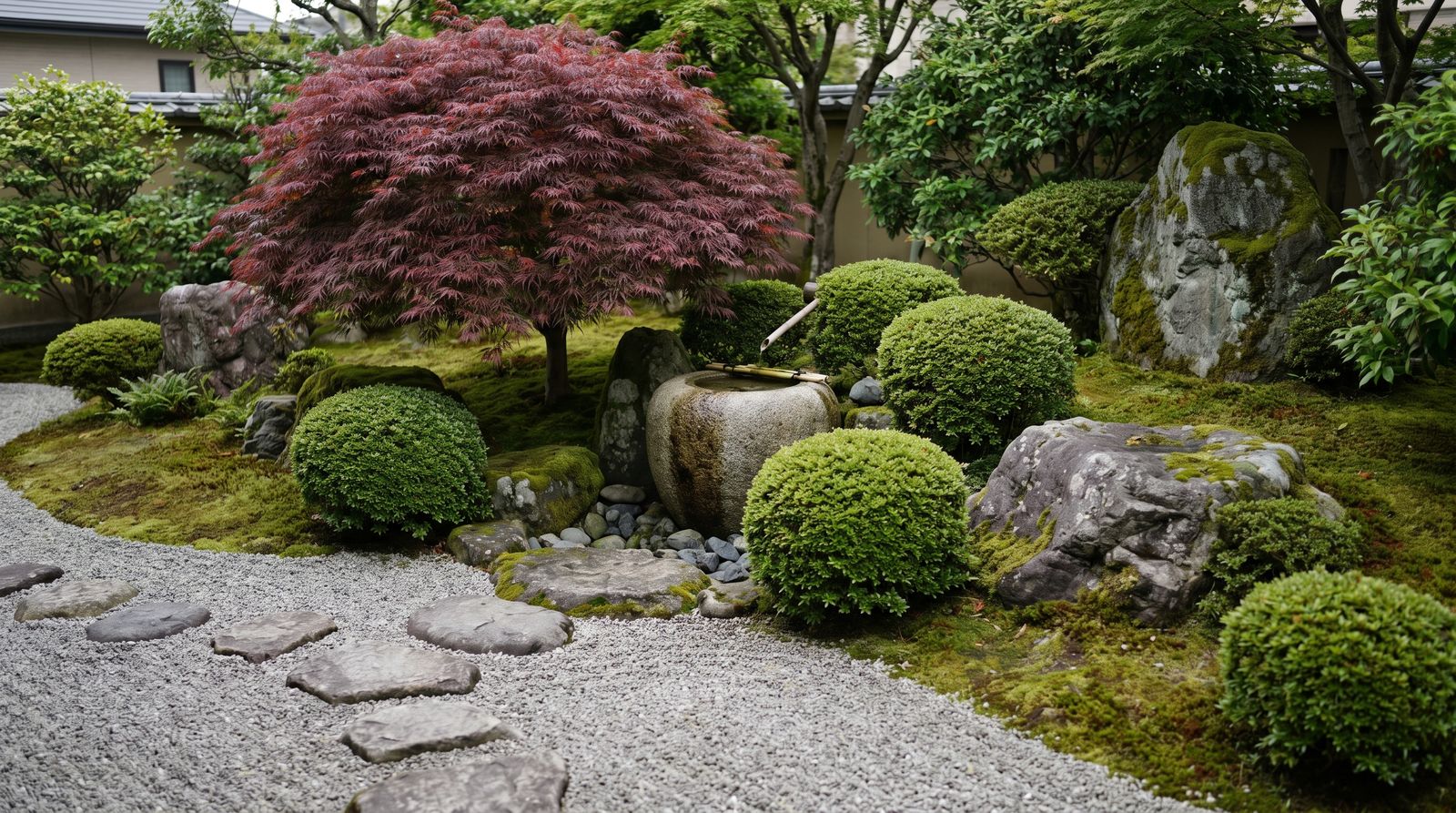
Fewer plants, placed with more care. A Japanese garden feels calm because nearly everything in it is green, evergreen and deliberately positioned.
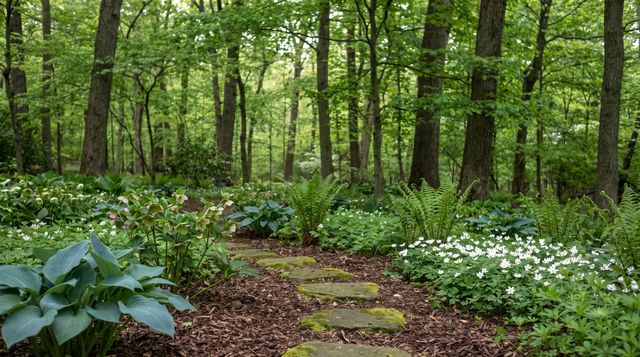
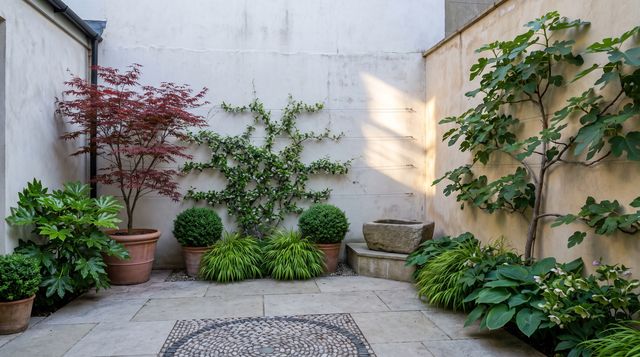
AI-generated concept image
- Light
- Partial shade
- Water
- Moderate
- Upkeep
- Medium
- Color
- Green-focused
- Planting survives
- 5 °F / −15 °C
Getting it right
Restraint does the work. Choose three or four plants and repeat them rather than collecting one of everything. Set the largest stone first and bury about a third of it so it looks settled rather than delivered, with the grain of every stone running the same way. Let paths bend so the garden is never visible all at once. Keep flower color to short seasonal moments, an azalea in spring and an iris in June, and let foliage and stone carry the other ten months.
How to plan it
Decide first what kind of garden it is. A dry garden is raked gravel and stone with very little planting; a stroll garden leads you along a path past views that open one at a time; a tea-garden style is a narrow stepping-stone path through moss and shade plants. In a typical backyard, a short stroll path or a dry garden in one corner works better than trying to do all three.
Build the view from the place you sit or the window you look out of most. Put the tallest element, often a Japanese maple or a mugo pine, off center rather than in the middle, set stones in groups of three or five, and screen the fence with bamboo or a slatted wood screen so the garden doesn't end in vinyl or chain-link.
Upkeep is regular but light: raking gravel, clipping azaleas and Japanese holly into soft mounds after they flower, and pinching back pine candles in late spring to keep the pine compact. Umbrella bamboo is a clumping type and stays where you put it; avoid running bamboos, which travel under fences.
Plants that work
| Plant | Type | Light | Water | Height | Hardy to |
|---|---|---|---|---|---|
| Japanese mapleAcer palmatum | Tree · Deciduous | Partial shade | Moderate | 7–20 ft (2–6 m) | −4 °F / −20 °C |
| Mugo pinePinus mugo | Conifer · Evergreen | Full sun | Low | 3–10 ft (1–3 m) | −40 °F / −40 °C |
| Japanese hollyIlex crenata | Shrub · Evergreen | Partial shade | Moderate | 2–8 ft (0.6–2.5 m) | −4 °F / −20 °C |
| Japanese forest grassHakonechloa macra | Grass · Deciduous | Partial shade | Moderate | 14–20 in (35–50 cm) | −13 °F / −25 °C |
| Mondo grassOphiopogon japonicus | Groundcover · Evergreen | Partial shade | Moderate | 6–10 in (15–25 cm) | 5 °F / −15 °C |
| Black mondo grassOphiopogon planiscapus 'Nigrescens' | Groundcover · Evergreen | Partial shade | Moderate | 6–10 in (15–25 cm) | −4 °F / −20 °C |
| Kyushu azaleaRhododendron kiusianum | Shrub · Semi-evergreen | Partial shade | Moderate | 2–4 ft (0.5–1.2 m) | −4 °F / −20 °C |
| CamelliaCamellia japonica | Shrub · Evergreen | Partial shade | Moderate | 5–13 ft (1.5–4 m) | 5 °F / −15 °C |
| Umbrella bambooFargesia murielae | Grass · Evergreen | Partial shade | Moderate | 8–13 ft (2.5–4 m) | −13 °F / −25 °C |
| Japanese irisIris ensata | Perennial · Deciduous | Full sun | High | 2–3 ft (0.6–1 m) | −22 °F / −30 °C |
| Scouring rushEquisetum hyemale | Perennial · Evergreen | Partial shade | High | 2–4 ft (0.6–1.2 m) | −22 °F / −30 °C |
| Heavenly bambooNandina domesticaInvasive in parts of the US. Check your state's list. | Shrub · Semi-evergreen | Partial shade | Moderate | 3–6 ft (1–1.8 m) | 5 °F / −15 °C |
Surfaces and materials
- Crushed granite
- Stepping stones
- Boulders
- Pebble mosaic
- Slatted wood screen
- Stone water basin
- Path lighting
Works well when
- The yard is small
- It is shaded for most of the day
- The light is dappled under trees
- It has to look good in winter
- Neighbors can see in
Think twice when
- You enjoy hands-on gardening
- The site is open and windy
- You want results in one season
Common questions
Do I need a pond for a Japanese garden?
No. Many Japanese gardens suggest water rather than containing it, with a stream of gray gravel, a stone basin or a dry streambed of river rock. A stone basin with a trickle of water gives you the sound without the upkeep of a pond.
What plants are used in Japanese gardens?
Mostly evergreens and foliage plants: Japanese maple, pines, Japanese holly clipped into mounds, and mondo grass or moss underneath, with short bursts of flower from azaleas, camellias and Japanese iris. The table above lists twelve that grow well outside Japan.
Can a Japanese garden work in a small yard?
It's one of the best styles for a small space, because it depends on a few well-placed elements rather than size. One maple, three stones, a gravel area and a screened fence can make a complete garden in 10 by 10 feet (3 × 3 m).
Is heavenly bamboo a problem?
In much of the Southeast it is: nandina seeds into woodland, and its berries are toxic to birds. Where it's listed as invasive, use Japanese holly or a dwarf nandina that sets little or no fruit.
See a Japanese garden on your own photo
Take a photo of the space as it is today and compare the redesign side by side with the original.

Scan to install