Sloped yard landscaping ideas
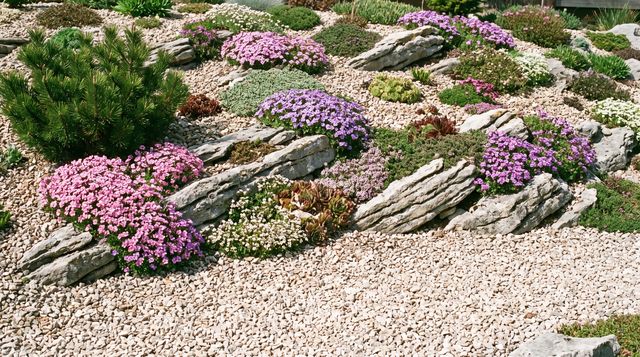
A slope becomes an asset the moment you stop trying to flatten it. The real decision is how much to terrace and how much to plant.
AI-generated concept image
- Light
- Partial shade
- Water
- Low
- Upkeep
- Medium
- Color
- Green-focused
- Planting survives
- −4 °F / −20 °C
Getting it right
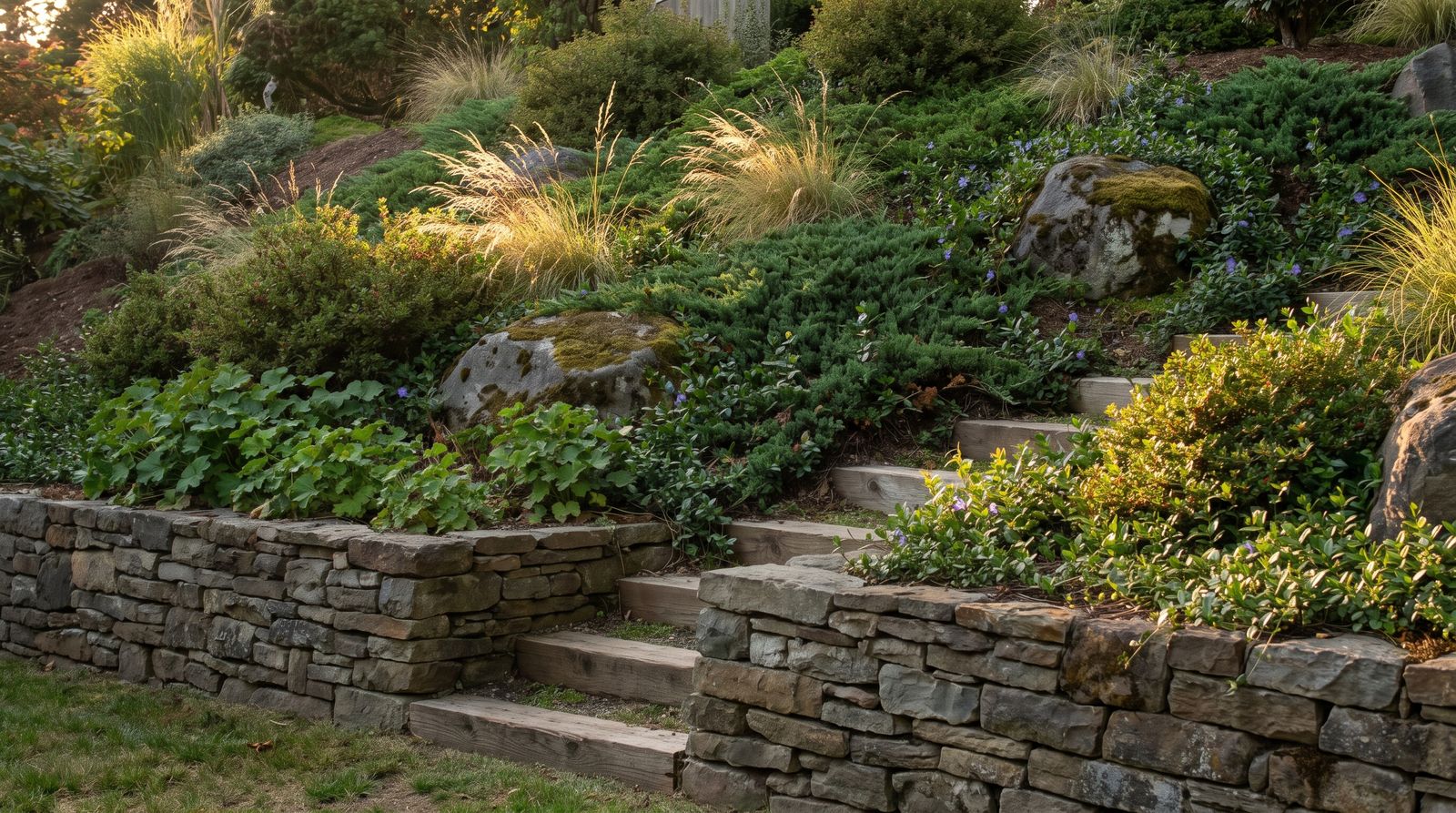
Terracing is the expensive option. A retaining wall over about 4 feet (1.2 m) usually needs an engineer and a permit, drainage behind it and proper footings, so terrace only where you genuinely need level ground and plant the rest. Get the steps right: a comfortable outdoor step is a 6-inch (15 cm) rise with a 14 to 16-inch (35–40 cm) tread, far shallower than indoor stairs, with a landing every ten steps or so. Then cover the remaining slope with deep-rooted groundcover planted through jute or coir erosion matting until it knits together.
How to plan it
Decide where you need flat ground: usually one level area by the house for seating and perhaps one more lower down. Terrace those and keep the rest of the slope planted. Two low walls, each under about 3 feet (90 cm), are usually cheaper and safer than one tall one, and they look better too.
Choose a wall material that suits the house and the budget. Landscape timbers are cheapest but rot within 10 to 20 years; dry-stacked stone and segmental concrete blocks last for decades; gabions and weathering steel suit modern yards. Every wall needs gravel backfill and a drain at its base, or water pressure will eventually push it over.
Plant the rest of the slope densely, with deep-rooted groundcovers and low shrubs set in staggered rows so their roots knit across it. Water them through the first year, and avoid lawn on any slope too steep to mow safely, roughly anything steeper than 1 foot of rise in 3 feet.
Plants that work
| Plant | Type | Light | Water | Height | Hardy to |
|---|---|---|---|---|---|
| Bearberry cotoneasterCotoneaster dammeri | Groundcover · Evergreen | Full sun | Low | 8–12 in (20–30 cm) | −13 °F / −25 °C |
| Creeping juniperJuniperus horizontalis | Conifer · Evergreen | Full sun | Low | 8–16 in (20–40 cm) | −40 °F / −40 °C |
| Creeping St. John's wortHypericum calycinum | Groundcover · Semi-evergreen | Partial shade | Low | 12–18 in (30–45 cm) | −4 °F / −20 °C |
| Periwinkle (vinca)Vinca minorInvasive in parts of the US. Check your state's list. | Groundcover · Evergreen | Shade | Low | 6–8 in (15–20 cm) | −22 °F / −30 °C |
| Bigroot geraniumGeranium macrorrhizum | Groundcover · Semi-evergreen | Partial shade | Low | 12–16 in (30–40 cm) | −22 °F / −30 °C |
| Japanese spurgePachysandra terminalis | Groundcover · Evergreen | Shade | Moderate | 8–12 in (20–30 cm) | −13 °F / −25 °C |
| SnowberrySymphoricarpos albus | Shrub · Deciduous | Partial shade | Low | 5–7 ft (1.5–2 m) | −31 °F / −35 °C |
| Rugosa roseRosa rugosaInvasive in parts of the US. Check your state's list. | Shrub · Deciduous | Full sun | Low | 3–7 ft (1–2 m) | −31 °F / −35 °C |
| Feather reed grassCalamagrostis × acutiflora | Grass · Deciduous | Full sun | Moderate | 4–6 ft (1.2–1.8 m) | −22 °F / −30 °C |
| Boxleaf honeysuckleLonicera pileata | Shrub · Evergreen | Partial shade | Low | 20–31 in (50–80 cm) | −4 °F / −20 °C |
| HeatherCalluna vulgaris | Shrub · Evergreen | Full sun | Low | 8–20 in (20–50 cm) | −22 °F / −30 °C |
| Mugo pinePinus mugo | Conifer · Evergreen | Full sun | Low | 3–10 ft (1–3 m) | −40 °F / −40 °C |
Surfaces and materials
- Landscape timbers
- Dry-stacked stone wall
- Gabion wall
- Weathering steel
- Stepping stones
- Bark mulch
- Boulders
Works well when
- The ground slopes steeply
- The soil is thin and poor
- You want low maintenance
- There is no vehicle access
- The soil is sandy and free-draining
Think twice when
- The budget is tight
- Young children play there
- You want to keep some lawn
Common questions
What's the cheapest way to landscape a slope?
Plant it rather than terrace it. Groundcovers and shrubs planted through erosion matting cost a fraction of retaining walls; add a simple path of timber or stone steps for access.
What groundcovers hold a slope?
Creeping juniper, bearberry cotoneaster, bigroot geranium and snowberry spread and root firmly. Avoid periwinkle next to woodland, where it escapes.
Do I need a permit for a retaining wall?
Often, if it's taller than about 4 feet (1.2 m) or holds up a driveway, a building or another load. Rules vary by town, so check with the building department before you build.
How do I stop erosion on a slope?
Keep the soil covered. Plant densely, mulch with shredded bark, which knits together better than chips, and use erosion matting until plants establish. Send roof and driveway runoff away from the slope or into a rain garden.
See a planted slope on your own photo
Take a photo of the space as it is today and compare the redesign side by side with the original.

Scan to install