Coastal garden ideas
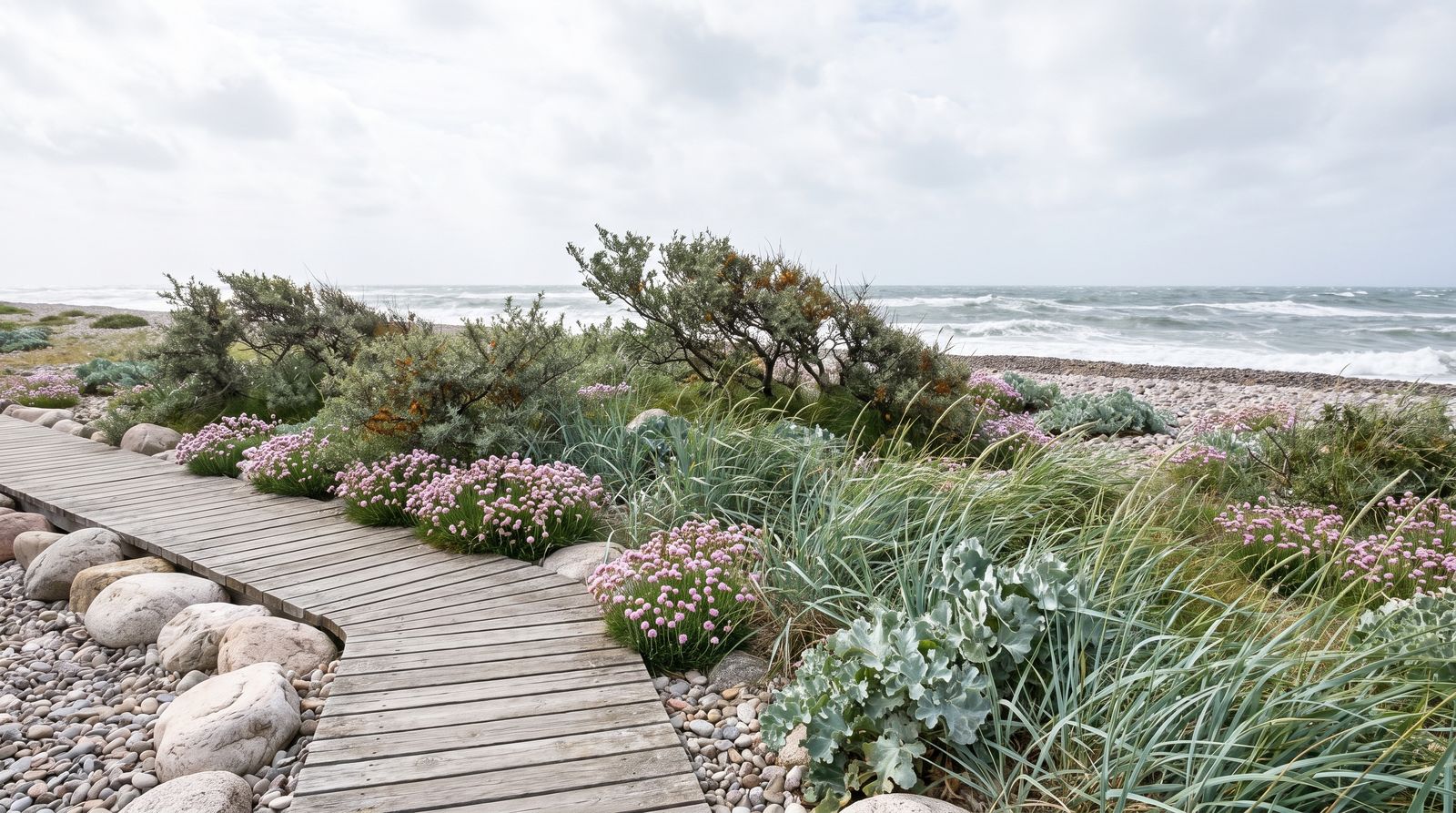
On the coast, wind is the entire design problem. Filter it rather than block it and a surprising range of planting becomes possible.
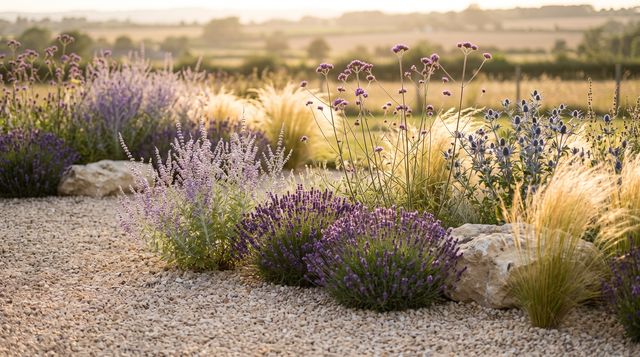
AI-generated concept image
- Light
- Full sun
- Water
- Low
- Upkeep
- Low
- Color
- Cool
- Planting survives
- 14 °F / −10 °C
Getting it right
Never build a solid wall or fence against the wind. Wind lifts over a solid barrier and slams down harder a few yards behind it; a permeable screen that lets roughly half the wind through does far more good, whether that's a slatted wood fence or a first row of tough shrubs. Plant small so roots establish before the top catches the wind. Keep silver, waxy and needled foliage on the exposed side and save anything soft-leaved for the pocket of shelter behind it.
How to plan it
Plan in bands from the water inward. The first band, facing the wind, is a windbreak of salt-tolerant shrubs and grasses; the second, in its shelter, can hold flowering shrubs; the area nearest the house, out of the wind, is where seating and softer plants go. On a small lot, a slatted wood screen can do the job of the first band.
Plant small, in fall or early spring when there's moisture and the wind is calmer, and stake young shrubs low so their roots can anchor. Sandy soil drains fast and holds few nutrients, so work in compost at planting time and mulch with gravel or crushed shell, which won't blow away like bark.
Choose materials that stand up to salt: stone, gravel, gabions, and hardwood or composite boardwalks. Galvanized steel corrodes slowly at the coast, while stainless or powder-coated fittings last longer. Rinse furniture and lights with fresh water after storms.
Plants that work
| Plant | Type | Light | Water | Height | Hardy to |
|---|---|---|---|---|---|
| Rugosa roseRosa rugosaInvasive in parts of the US. Check your state's list. | Shrub · Deciduous | Full sun | Low | 3–7 ft (1–2 m) | −31 °F / −35 °C |
| Sea buckthornHippophae rhamnoides | Shrub · Deciduous | Full sun | Low | 7–16 ft (2–5 m) | −31 °F / −35 °C |
| Sea thriftArmeria maritima | Perennial · Evergreen | Full sun | Low | 6–10 in (15–25 cm) | −22 °F / −30 °C |
| Sea hollyEryngium maritimum | Perennial · Deciduous | Full sun | Low | 12–20 in (30–50 cm) | −4 °F / −20 °C |
| Blue lyme grassLeymus arenarius | Grass · Deciduous | Full sun | Low | 2–3 ft (0.6–1 m) | −22 °F / −30 °C |
| Sea kaleCrambe maritima | Perennial · Deciduous | Full sun | Low | 20–28 in (50–70 cm) | −13 °F / −25 °C |
| EscalloniaEscallonia rubra | Shrub · Evergreen | Full sun | Moderate | 5–8 ft (1.5–2.5 m) | 14 °F / −10 °C |
| Daisy bushOlearia × haastii | Shrub · Evergreen | Full sun | Low | 5–8 ft (1.5–2.5 m) | 10 °F / −12 °C |
| Tamarisk (saltcedar)Tamarix ramosissimaInvasive in parts of the US. Check your state's list. | Shrub · Deciduous | Full sun | Low | 8–13 ft (2.5–4 m) | −4 °F / −20 °C |
| HeatherCalluna vulgaris | Shrub · Evergreen | Full sun | Low | 8–20 in (20–50 cm) | −22 °F / −30 °C |
| Winter heathErica carnea | Shrub · Evergreen | Full sun | Moderate | 8–12 in (20–30 cm) | −13 °F / −25 °C |
| Mugo pinePinus mugo | Conifer · Evergreen | Full sun | Low | 3–10 ft (1–3 m) | −40 °F / −40 °C |
| Blue fescueFestuca glauca | Grass · Evergreen | Full sun | Low | 8–12 in (20–30 cm) | −22 °F / −30 °C |
Surfaces and materials
- Crushed granite
- Landscape timbers
- Wood boardwalk
- Boulders
- Slatted wood screen
- Gabion wall
Works well when
- Salt spray blows in off the ocean
- The site is open and windy
- The soil is sandy and free-draining
- You want low maintenance
- The soil is thin and poor
Think twice when
- You want more privacy
- The soil is heavy clay
- You want results in one season
Common questions
What plants tolerate salt spray?
Plants with gray, waxy, leathery or needle-like leaves, which shed salt: sea thrift, sea holly, blue lyme grass, heather, mugo pine and escallonia are on the list above. On the East Coast, natives such as bayberry and beach plum are excellent first-line shrubs.
Is rugosa rose a good coastal plant?
It's extremely tough, but it spreads through sand dunes and is considered invasive along parts of the Northeast and Pacific coasts. Use it only away from dunes and natural areas, or choose a native such as Virginia rose.
What about tamarisk?
Avoid it in the US. Tamarisk, also called saltcedar, is one of the most damaging invasive plants in the West, and several states ban it. Use a native salt-tolerant shrub instead.
How do I protect plants from wind?
Filter the wind rather than block it. A screen or hedge that lets about half the wind through slows it for a distance of several times its own height, without the turbulence a solid fence creates.
See a coastal garden on your own photo
Take a photo of the space as it is today and compare the redesign side by side with the original.

Scan to install